Home Energy Tech Stacking: July 2026 News Analysis
An analysis of July 2026 news on heat pump running costs, combined low-carbon technology performance, and upcoming plug-in solar regulations.
- Written by
- Net Zero Home Scheme editorial team
- Last updated
- Topic
- home energy, heat pumps, solar pv
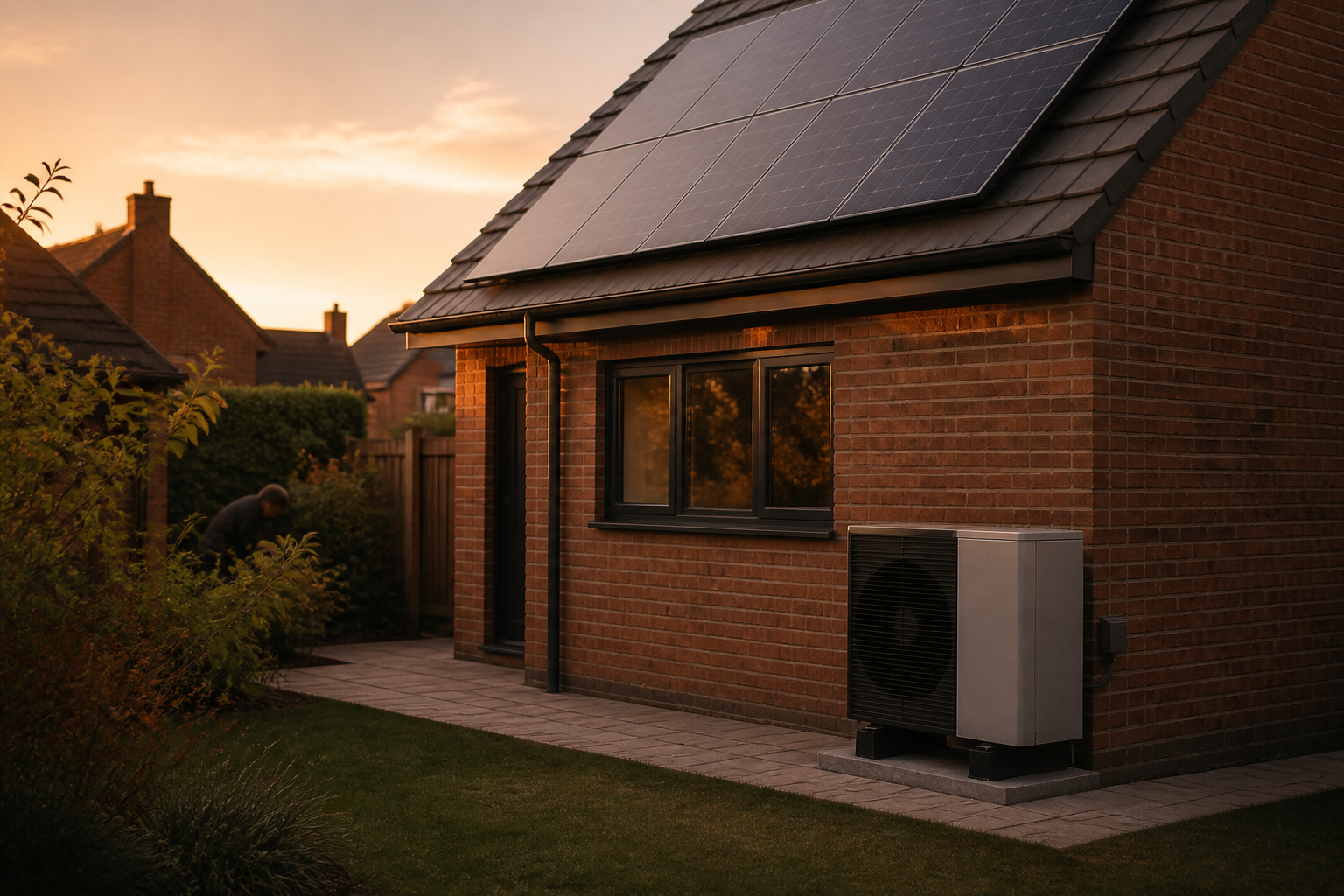
Industry reports published in July 2026 highlight a growing shift in how UK households approach domestic decarbonisation. On 20 July 2026, Energy Live News reported on sector modeling showing that combining low-carbon technologies, such as solar photovoltaic (PV) panels, home battery storage, and air source heat pumps, can reduce household energy running costs by more than 80% under optimal conditions. On the same day, Yahoo News UK published an analysis of heat pump operational economics, detailing why standalone heat pump installations sometimes fail to deliver expected financial savings when uncoupled from solar, storage, or flexible electricity tariffs.
At the same time, coverage by the Energy Saving Trust on 24 July 2026 and AOL on 26 July 2026 examined updated technical guidance for plug-in solar systems entering force in August 2026. Together, these publications mark a transition from evaluating green home installations as individual retrofits toward viewing them as integrated home energy systems.
Evaluating the performance of combined low-carbon technology
The report highlighted by Energy Live News on 20 July 2026 focuses on system integration, often referred to as clean technology stacking. Rather than relying on a single measure, such as replacing a gas boiler or adding rooftop solar, a stacked installation links generation, storage, and electrified heating under a single control framework.
In a stacked configuration, a domestic solar PV array generates electricity during daylight hours. A stationary home battery, typically sized between 5 kWh and 13.5 kWh, stores excess generation for use during peak evening demand hours. When generation is low, smart management software draws grid power during cheap off-peak hours, such as overnight dynamic tariff windows, to power an air source heat pump or pre-charge the battery.
Modeling indicates that this integrated approach decouples household energy bills from peak wholesale electricity rates. However, achieving significant running cost reductions depends heavily on specific baseline conditions. An 80% reduction in annual bills requires high self-consumption of solar generation, a properly sized battery, a home heat loss profile that allows low flow temperatures, and continuous access to a time-of-use energy tariff.
Heat pump operational realities and the spark spread
The operational challenge facing standalone heat pumps was detailed by Yahoo News UK on 20 July 2026. In Great Britain, retail electricity prices remain linked to wholesale gas prices due to the marginal pricing structure of the national electricity grid. Under the Ofgem energy price cap effective through mid-2026, standard unit rates sit at approximately 24.5p per kWh for electricity and 6.2p per kWh for gas.
This price gap is known as the spark spread. Because unit electricity costs roughly four times more than unit gas, an air source heat pump must operate with high efficiency to achieve lower running costs than a modern gas boiler. Efficiency is measured by the Seasonal Coefficient of Performance (SCOP), which represents the ratio of heat output produced per unit of electrical input over a full heating season.
- A heat pump operating at an average SCOP of 2.5 delivers 2.5 kWh of heat for every 1 kWh of electricity consumed. At current unit rates, heat delivered costs approximately 9.8p per kWh, making it more expensive to run than a 85% efficient gas boiler delivering heat at around 7.3p per kWh.
- A heat pump operating at an average SCOP of 3.8 delivers heat at approximately 6.4p per kWh, undercutting gas boiler running costs.
- Lowering system flow temperatures from 65°C to 35°C or 45°C directly increases the SCOP, which requires correctly sized heat emitters, such as larger radiators or underfloor heating.
Without emitter upgrades or dynamic off-peak tariffs, heat pumps installed as direct replacements for high-temperature gas systems risk higher operating bills, even while reducing operational carbon emissions.
Regulatory updates for plug-in solar systems
Reports published by the Energy Saving Trust on 24 July 2026 and AOL on 26 July 2026 outlined changes to the regulatory landscape for plug-in solar panels taking effect in August 2026. Plug-in solar kits use small micro-inverters connected directly to a household socket or spur, generating up to 800W of AC power without requiring conventional roof-mounted array wiring.
Updated guidance clarifies grid connection protocols under Engineering Recommendation G98 issued by the Energy Networks Association (ENA). Key provisions include strict limits on inverter capacity to prevent circuit overloading, requirement for certified anti-islanding protection to isolate the system during power outages, and simplified notification procedures for Distribution Network Operators (DNOs).
While plug-in systems offer lower upfront capital barriers, they generate smaller total yields than standard rooftop solar arrays. A typical 400W to 800W plug-in setup can cover baseline household background loads, such as refrigerators and broadband routers, but lacks the capacity to power heavy loads or charge larger home batteries rapidly.
Key standards and compliance checks for UK home energy installs
| Technology / System | Certifying Body or Scheme | Technical Standard | Primary Regulatory Requirement |
|---|---|---|---|
| Solar PV and Battery Storage | Microgeneration Certification Scheme (MCS) | MIS 3002 / MIS 3012 | G98/G99 DNO notification and TrustMark compliance |
| Air Source Heat Pumps | MCS / Building Regulations | MIS 3005-D | BS EN 12831 heat loss calculation and noise assessment |
| Home Electrical Wiring | NICEIC / NAPIT / ELECSA | BS 7671 (18th Edition) | Part P building control compliance certificate |
| Plug-in Solar Kits | Energy Networks Association (ENA) | ENA ER G98 | Max 800W capacity, anti-islanding, DNO notification |
What this means for you
If you are considering home energy retrofits or upgrades, recent developments highlight several practical operational steps:
- Request a full heat loss calculation under BS EN 12831 before installing a heat pump, rather than relying on legacy gas boiler thermal sizing rule-of-thumb estimates.
- Ensure your heat pump design flow temperature is set as low as practical, ideally below 45°C, to secure an SCOP above 3.5.
- Evaluate solar PV and battery storage jointly. Sizing a battery to match your typical evening energy consumption maximises self-consumption of daytime solar generation.
- Check installer accreditations. Installations should be completed by MCS-certified contractors who belong to a recognised consumer code, such as the Renewable Energy Consumer Code (RECC) or the Home Insulation and Energy Systems Quality Assured Contractors Scheme (HIES).
- Review energy tariffs. Maximising savings from low-carbon hardware relies on pairing systems with dynamic or time-of-use tariffs designed for electric heating and battery storage.
- Employers seeking to support workforce decarbonisation can offer access to the Net Zero Home Scheme, a free employee benefit provided by Net Zero Benefits alongside The Electric Car Scheme, which offers member pricing on accredited solar, heat pump, and battery storage installations with no salary sacrifice or payroll deductions.
Frequently asked questions
Can a heat pump lower my energy bills without solar panels?
Yes, but savings depend on system efficiency and your energy tariff. A heat pump operating with an SCOP above 3.5 will generally cost less to run than a standard gas boiler. Pairing the heat pump with a flexible time-of-use tariff that offers lower off-peak electricity rates further reduces heating bills, even without solar panels on the roof.
What is the main regulatory requirement for plug-in solar systems?
Plug-in solar systems must comply with Engineering Recommendation G98 guidelines. The system inverter must be capped at a maximum output of 800W, include certified anti-islanding protection to safety-isolate during grid disruptions, and be formally notified to your local Distribution Network Operator.
Why does heat pump flow temperature affect running costs?
Heat pumps operate most efficiently when raising water to lower temperatures. Lowering the required flow temperature from 65°C to 35°C reduces the compressor workload, significantly raising the Seasonal Coefficient of Performance (SCOP) and lowering the amount of electricity required to heat the home.
Sources
- Combining low-carbon technologies could cut household energy bills by more than 80%, Energy Live News
- Why your heat pump isn't saving you money - and what could change that, Yahoo News UK
- Plug-in solar panels and the rooftop revolution, Energy Saving Trust
- New plug-in solar panel rules come into force in August across the UK, AOL.co.uk