Solar Inverter Oversizing and DC to AC Ratios Explained
Learn how oversizing your solar array relative to inverter capacity increases annual generation and simplifies G98 grid compliance for UK homes.
- Written by
- Net Zero Home Scheme editorial team
- Last updated
- Topic
- solar, energy efficiency, mcs
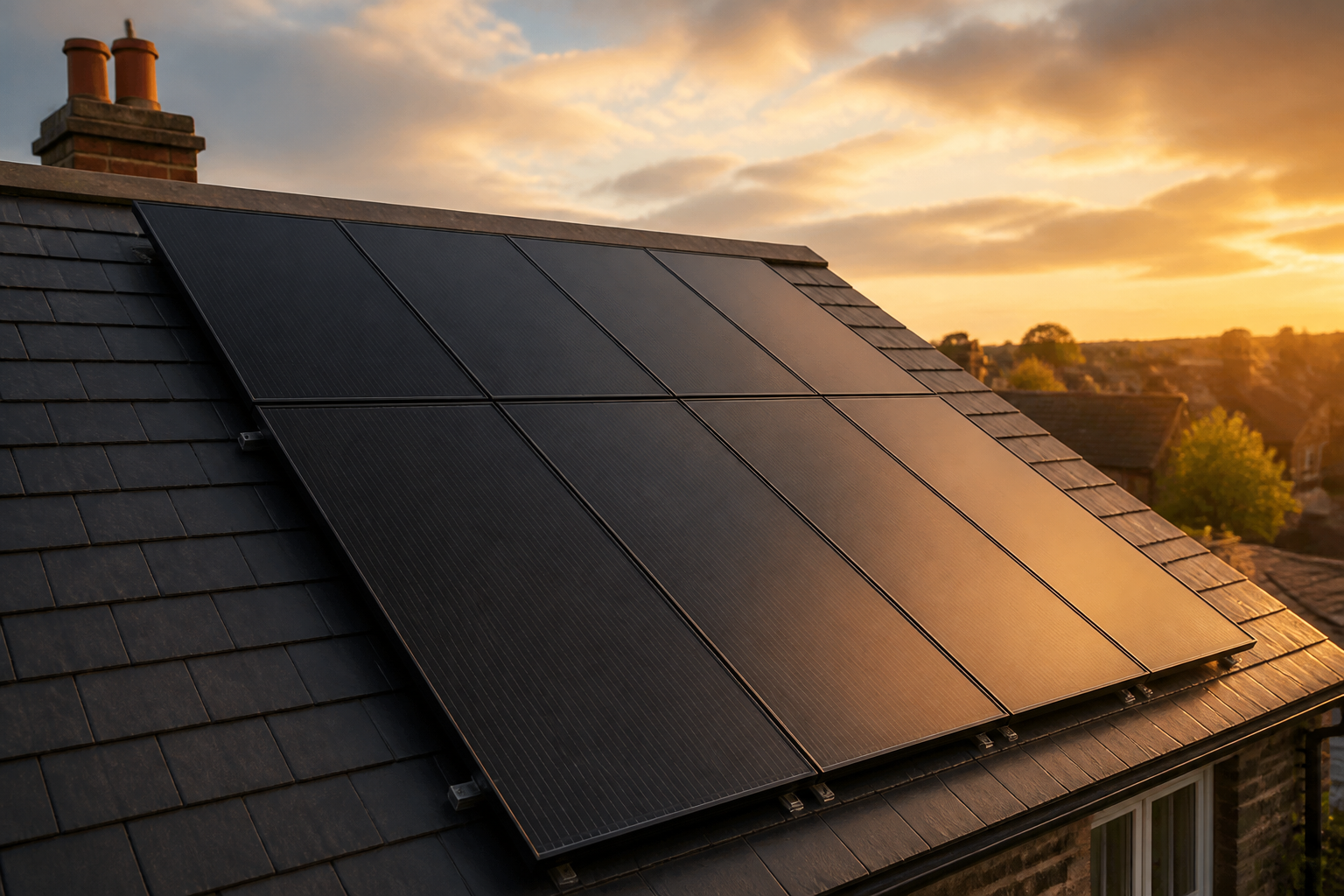
When designing a solar photovoltaic (PV) system for a UK home, installers often pair solar panel arrays with inverters rated at a lower kilowatt output than the peak DC rating of the panels. This practice, known as inverter oversizing or increasing the direct current to alternating current (DC to AC) ratio, is a standard engineering approach backed by Microgeneration Certification Scheme (MCS) guidelines and Energy Networks Association (ENA) grid standards.
Understanding why installers intentionally specify a 5 kilowatt peak (kWp) panel array alongside a 3.68 kilowatt (kW) inverter requires looking at UK climate conditions, inverter operational physics, and distribution network operator (DNO) connection limits.
How DC to AC oversizing works in practice
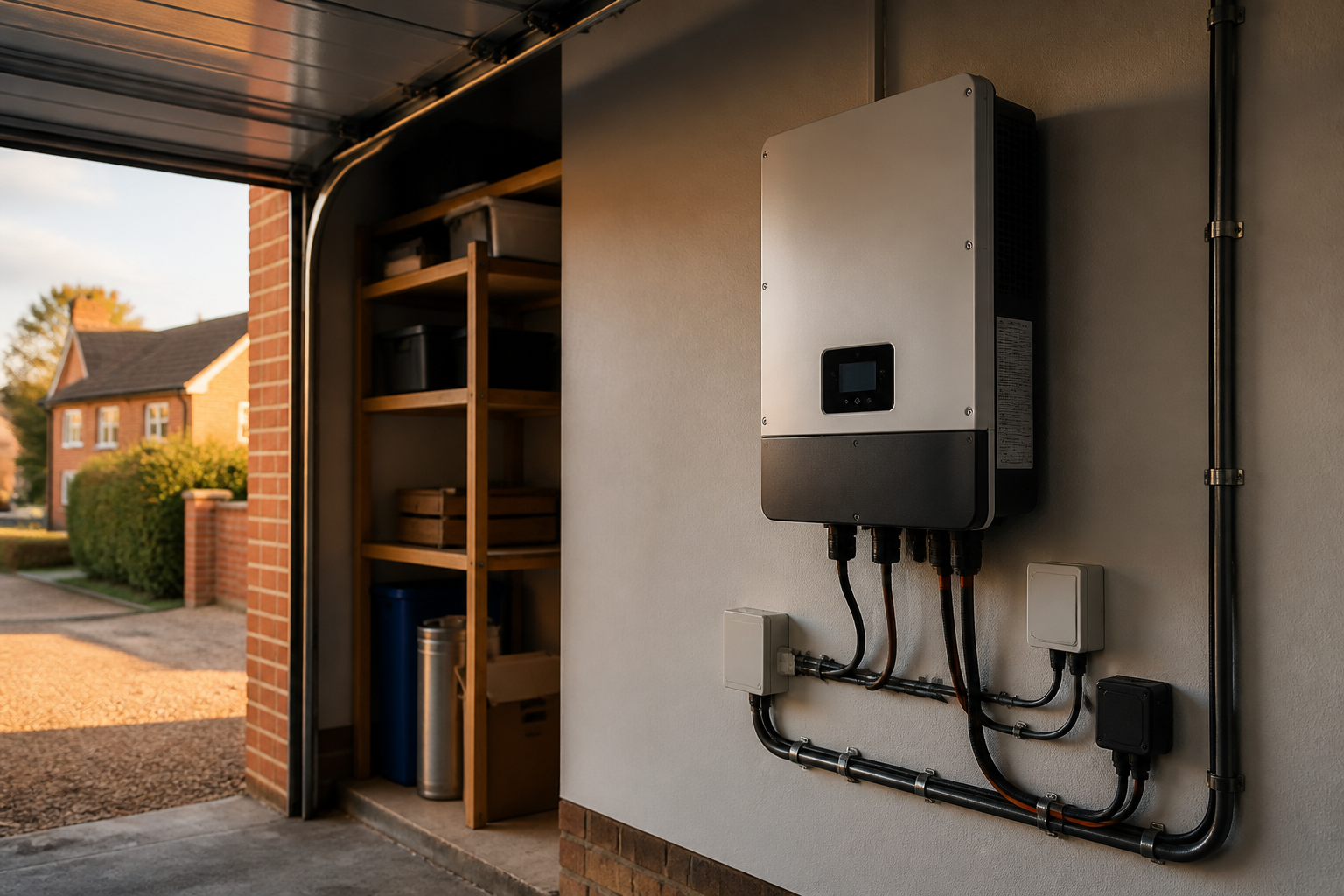
A solar PV system consists of two primary energy-conversion components: the solar panels that generate direct current (DC) power from daylight, and the inverter that converts DC electricity into alternating current (AC) electricity for home appliances or grid export.
The peak rating of a solar panel, measured in kilowatt peak (kWp), reflects its electrical output under Standard Test Conditions (STC) of 1,000 watts per square metre of solar irradiance and a cell temperature of 25 degrees Celsius. In the UK, daylight intensity rarely reaches these laboratory benchmark levels for prolonged periods. Atmospheric scattering, cloud cover, seasonal sun angles, and roof pitch mean that a panel array operates below its peak kWp rating for most of the year.
Inverter oversizing involves installing a total panel capacity that exceeds the maximum AC rating of the inverter. For example, a system with a DC to AC ratio of 1.25 to 1 combines 4.6 kWp of solar panels with a 3.68 kW AC inverter. During morning, evening, and winter hours, when light levels are low, the larger panel array generates more DC electricity, forcing the inverter to operate closer to its maximum output curve where electrical conversion efficiency is highest.
Why UK light conditions favour higher DC to AC ratios
Data from the Energy Saving Trust shows that solar panels in the UK generate the vast majority of their annual yield under diffuse light conditions rather than direct, mid-summer sunlight. On overcast days, an undersized or strictly 1 to 1 matched array may only output 10 percent to 20 percent of its nominal rated capacity.
By oversizing the DC array, you increase the total power produced during these low-light periods:
- Increased morning and late afternoon generation when home energy demand is high.
- Higher seasonal output through autumn and winter months when sun angles are lower.
- Faster inverter startup in the morning because the system reaches minimum operating voltage earlier.
- Higher overall annual output per kilowatt of inverter capacity installed.
When bright sunlight does occur around solar noon in mid-summer, a panel array may generate more DC power than the inverter can convert to AC. In this scenario, the inverter automatically limits the incoming power to its maximum AC output rating. This phenomenon is known as inverter clipping.
Calculating power clipping loss versus low-light yield gain
While inverter clipping results in lost energy during peak daylight hours, physics and empirical solar data demonstrate that this loss is small compared to the yield gained during low-light hours throughout the rest of the year.
The table below compares three common single-phase array configurations installed under standard UK weather patterns:
| Array DC Rating (kWp) | Inverter AC Rating (kW) | DC to AC Ratio | Estimated Annual Clipping Loss | Net Annual Generation Gain |
|---|---|---|---|---|
| 3.68 kWp | 3.68 kW | 1.00 to 1 | 0.0 percent | Baseline yield |
| 4.60 kWp | 3.68 kW | 1.25 to 1 | 0.5 to 1.5 percent | 20 to 23 percent |
| 5.15 kWp | 3.68 kW | 1.40 to 1 | 2.5 to 4.0 percent | 32 to 36 percent |
According to MCS installation guidance, DC to AC ratios between 1.2 to 1 and 1.35 to 1 deliver optimal annual generation profile curves for UK rooftop orientations without causing excess thermal stress or accelerated component wear on modern inverter hardware.
How grid connection limits influence inverter sizing
Grid regulations enforced by the Energy Networks Association play a major role in system design across England, Scotland, and Wales. Under Engineering Recommendation G98, single-phase grid connections permit a maximum continuous AC export capacity of 3.68 kW (16 amperes at 230 volts) without prior approval from your local Distribution Network Operator.
If an installer fits an inverter rated above 3.68 kW AC, you must submit a G99 application to the DNO and await approval before installation. In areas with constrained local network infrastructure, DNO approval can take weeks or incur network upgrade fees.
Oversizing the panel array while keeping the inverter AC rating capped at 3.68 kW allows homeowners to authorise maximum rooftop capacity under the simplified G98 fast-track registration route.
Operational limits and thermal considerations
While oversizing offers operational advantages, installers must adhere to strict manufacturer design boundaries and electrical safety standards:
- Maximum DC input voltage: The open-circuit voltage (Voc) of the panel array at low temperatures (typically calculated at minus 10 degrees Celsius in the UK) must never exceed the maximum input voltage rating of the inverter tracker.
- Maximum DC short-circuit current: Array short-circuit current (Isc) must remain within the maximum current threshold specified by the inverter manufacturer.
- Thermal dissipation: Inverters convert DC to AC with roughly 97 percent to 98 percent efficiency. The remaining 2 percent is converted to thermal heat. Mounting the inverter in a well-ventilated space (such as a garage or clear utility space) ensures component reliability when operating near full output.
What this means for you
If you are planning a solar installation or expanding an existing array, understanding inverter oversizing helps you make informed choices with your MCS-accredited installer.
- Check your roof space: If you have physical space for 4.5 kWp to 5 kWp of panels, pairing them with a 3.68 kW inverter is often more cost-effective than restricting panel capacity to match inverter output.
- Avoid unnecessary G99 delays: Keeping the inverter AC rating at 3.68 kW preserves fast-track G98 notification, eliminating DNO application waiting times while maximising total clean electricity production.
- Consider battery integration: If your system includes a hybrid inverter with a direct DC battery connection, excess DC energy that would otherwise be clipped can often be diverted straight into charging your home battery storage system.
- Check warranty terms: Ensure your installer verifies that the chosen DC to AC ratio remains within the inverter manufacturer's written warranty parameters, which typically permit ratios up to 1.35 to 1 or 1.5 to 1 depending on brand.
Employees accessing member pricing through the Net Zero Home Scheme can discuss array sizing, inverter efficiency curves, and DNO compliance options directly with qualified design specialists before committing to an installation.
Frequently asked questions
Will inverter oversizing damage my equipment or void the warranty?
No, provided the maximum DC voltage and current limits of the inverter inputs are respected. Modern string and hybrid inverters actively manage incoming current by shifting their operating point along the voltage curve when input power exceeds capacity, protecting internal electronics from overload.
Is clipping energy wasted if I have a home battery?
In a hybrid inverter system with a DC-coupled battery, excess solar generation above the inverter's AC output limit can be redirected directly into the battery as DC power, preventing energy loss from clipping during sunny weather.
Does oversizing work on north or east-west facing roofs?
Yes, oversizing is particularly effective on non-south roofs or split orientations. Because panels facing east, west, or north receive less peak irradiance, oversizing the DC array ensures the inverter operates closer to its maximum output for a greater portion of the day.
Sources
- G98 Requirement for Micro-generators, Energy Networks Association
- Solar Panels Guide, Energy Saving Trust
- MCS Guidance and Standards, Microgeneration Certification Scheme