Replacing a Gas Boiler with an Air Source Heat Pump
A step-by-step guide to replacing a gas boiler with an air source heat pump, covering heat loss checks, radiator sizing, MCS standards, and installation timelines.
- Written by
- Net Zero Home Scheme editorial team
- Last updated
- Topic
- heat pumps, home energy, heating
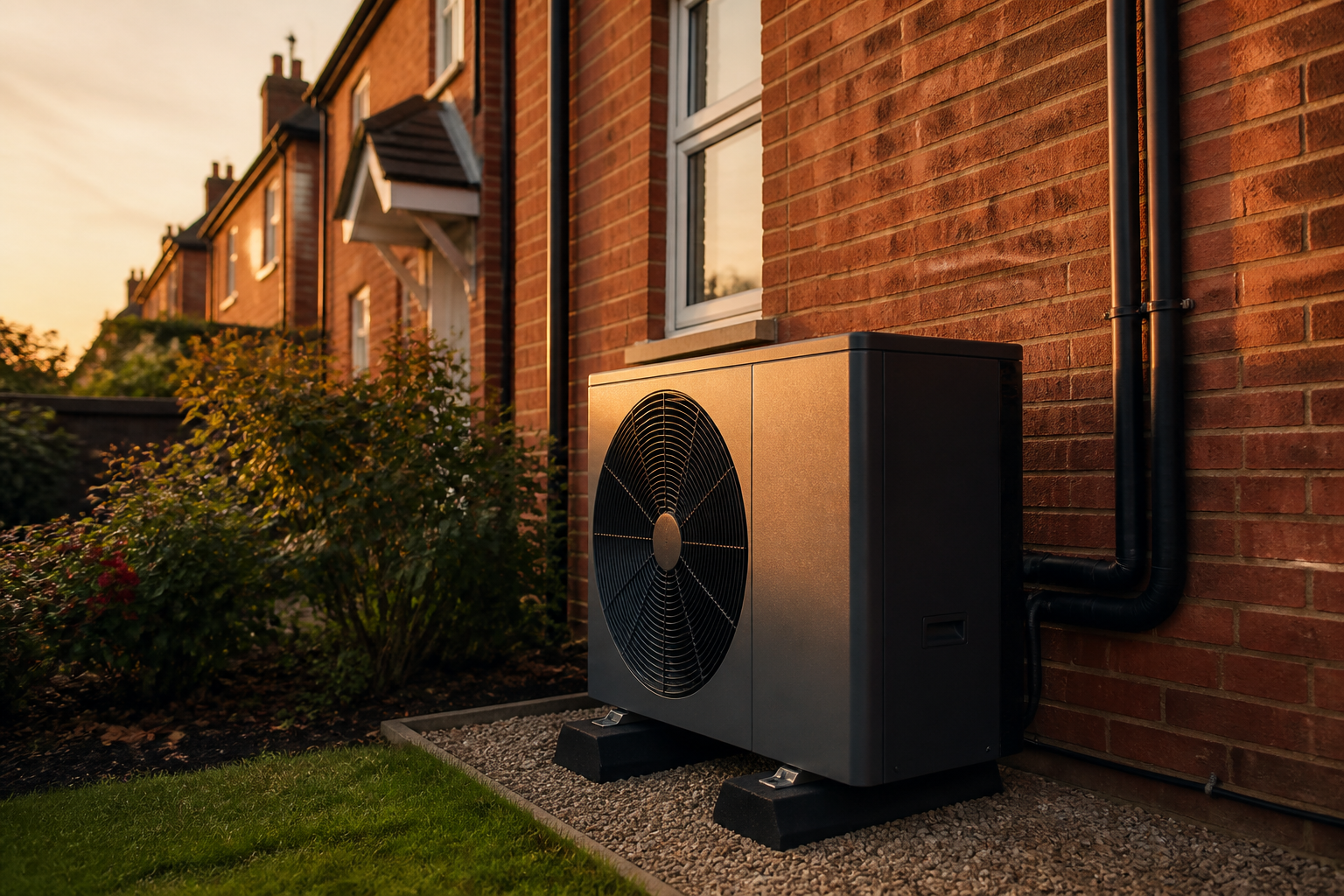
Switching from a gas or oil boiler to an air source heat pump is one of the most effective ways to reduce home energy emissions and transition to clean heating. However, a heat pump operates on fundamentally different engineering principles from a traditional boiler. Instead of delivering brief bursts of high-temperature water, a heat pump warms your home continuously using lower flow temperatures. A successful conversion requires careful planning, accurate heat loss calculations, and correct equipment selection. This guide sets out the practical steps, technical checks, costs, and timescales required to replace a gas boiler with an air source heat pump.
Step 1: Assessing property suitability and heat loss
Before seeking installer quotes, evaluate your home's insulation and airtightness. Heat pumps operate most efficiently when producing water at flow temperatures between 35°C and 55°C, compared to traditional gas boilers which typically operate at 60°C to 70°C. According to guidance from the Energy Saving Trust, upgrading loft insulation to at least 270 mm and insulating cavity walls where possible reduces peak heat demand, enabling a smaller, less expensive heat pump to maintain room temperatures.
An accredited installer will perform a room-by-room heat loss calculation following BS EN 12831 standards. This calculation measures wall U-values, window dimensions, glazing types, floor construction, and ventilation rates. The results determine the precise heat demand in kilowatts for each room at local winter design temperatures, typically set between -3°C and -5°C depending on your location in Great Britain.
Step 2: Evaluating radiators and pipework
Because heat pumps circulate cooler water than gas boilers, your heating distribution network must be assessed to ensure it can transfer sufficient thermal energy into your living spaces.
- Radiator surface area: Standard single-panel radiators often need replacing with double-panel or triple-panel convector radiators (Type 22 or Type 33) to achieve the required heat output at lower flow temperatures. Underfloor heating is inherently compatible due to its large surface area.
- Internal pipework: Existing 8 mm or 10 mm microbore piping can restrict water flow rates. Heat pumps require higher volumetric flow rates than high-temperature boilers, so narrow pipework must be assessed for hydraulic pressure drops to avoid circulation noise or reduced heat transfer.
- Hot water cylinder: Heat pump systems usually require a dedicated unvented hot water cylinder with an enlarged internal coil (typically 2.0 to 3.0 square metres of coil surface area) to permit efficient heat transfer from lower input temperatures.
Step 3: Checking electrical capacity and planning permission
Air source heat pumps rely on an electrically driven compressor. Your installation requires two regulatory and infrastructure checks before physical work begins:
- Distribution Network Operator notification: Your installer must notify or seek approval from your local Distribution Network Operator, such as National Grid Electricity Distribution, UK Power Networks, or SP Energy Networks. Under energy industry connection standards, systems meeting peak current limits use the G98 Connect and Notify process, while larger units require advance approval under G99 rules to confirm your electrical supply fuse (typically 60A to 100A) can handle the load.
- Planning regulations: In England and Wales, most domestic air source heat pump installations qualify as Permitted Development, provided they satisfy Microgeneration Certification Scheme planning standard MCS 020. This standard sets strict acoustic limits at neighbour boundaries, requires the outdoor unit to sit at least one metre from property limits, and restricts unit volume to under 0.6 cubic metres. In Scotland, similar permitted development framework rules apply, though specific distance boundaries differ.
Step 4: Installation day and realistic timelines
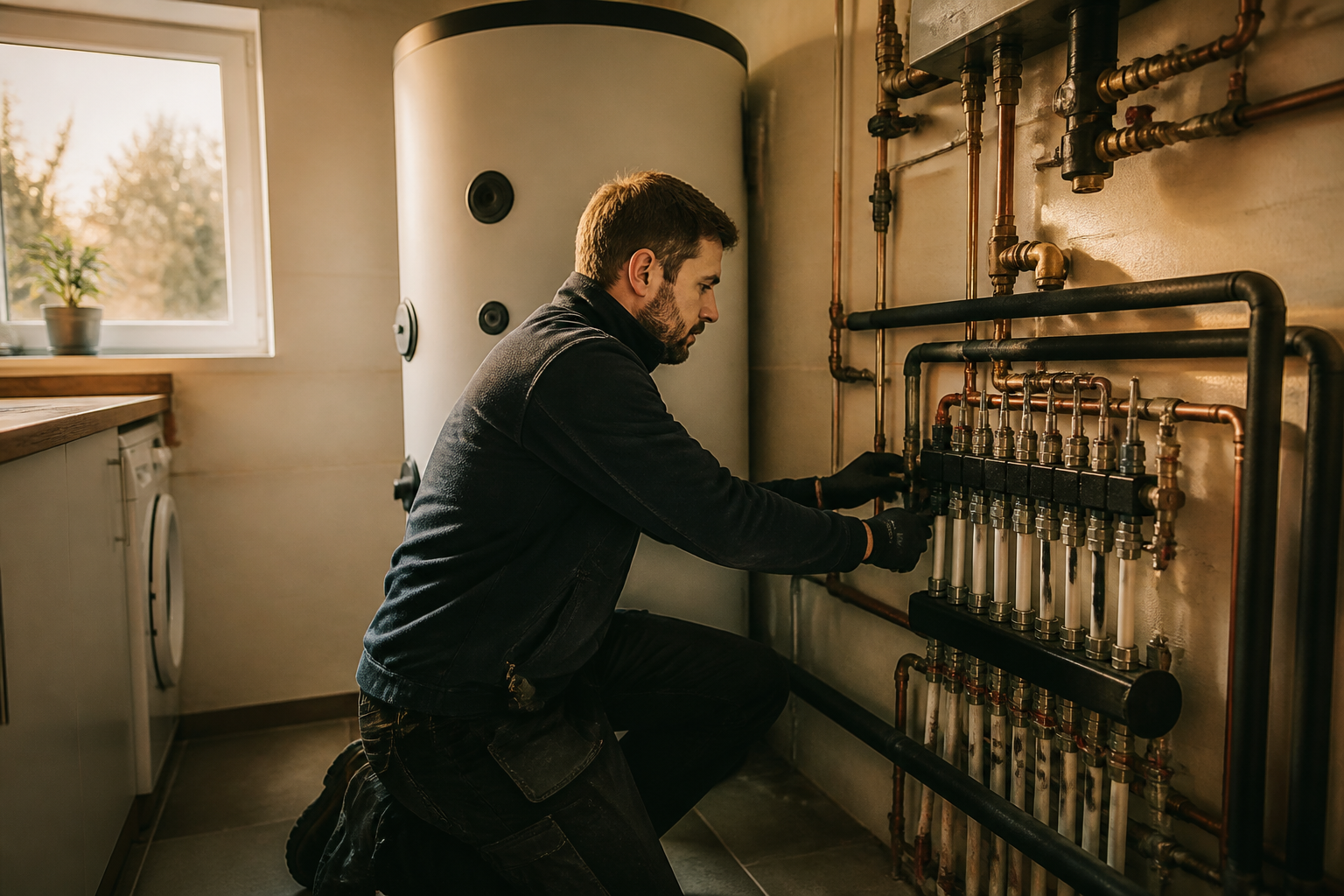
A standard domestic heat pump conversion takes between three and five working days on site, preceded by two to four weeks of survey work and grid notifications.
| Phase | Duration | Operational Activities |
|---|---|---|
| Technical Survey | 1 to 2 weeks prior | Room heat loss calculations, DNO filing, emitter sizing |
| Day 1: Decommissioning | 1 day | Drain central heating, remove boiler, power-flush pipework |
| Days 2 to 3: Mechanical Fit | 2 days | Set outdoor heat pump unit, install cylinder, swap radiators |
| Day 4: Electrical & Controls | 1 day | Run dedicated consumer unit circuit, wire controls and sensors |
| Day 5: Commissioning | 1 day | System pressure test, fill heat transfer fluid, balance flow rates |
Step 5: Understanding costs and installer accreditation
Data published by the Energy Saving Trust shows that a typical air source heat pump installation for a three-bedroom semi-detached property costs between £9,000 and £13,000 including equipment, pipework upgrades, cylinder installation, and labour, before any applicable national subsidies.
To ensure safe installation and maintain warranty protection, verify that your installer holds active certifications with recognized bodies:
- Microgeneration Certification Scheme (MCS): Confirms compliance with technical standards and enables eligibility for national funding schemes.
- Consumer Code Membership: Look for registration with the Renewable Energy Consumer Code (RECC) or the Home Insulation and Energy Systems Contractors Scheme (HIES) to ensure consumer protection and clear dispute resolution processes.
- Electrical and Plumbing Competency: Registration with NICEIC, NAPIT, or the Chartered Institute of Plumbing and Heating Engineering (CIPHE) guarantees tradespeople meet current UK building regulations.
Householders exploring energy efficiency upgrades can access vetted, accredited installers providing transparent pricing through the Net Zero Home Scheme, delivered without salary sacrifice or payroll deductions.
What this means for you
Replacing a gas boiler with an air source heat pump requires shifting from high-temperature intermittent heating to continuous lower-temperature operation. By completing basic insulation upgrades, ensuring accurate room-by-room heat loss calculations, and selecting an MCS-certified installer, you can achieve reliable year-round comfort, lower ongoing carbon emissions, and high operational efficiency.
Frequently asked questions
Do I need to replace all the radiators in my house?
Not necessarily. Many existing radiators may remain suitable, particularly if you have previously added loft or wall insulation. Your installer's room-by-room heat loss assessment will pinpoint which specific radiators need upgrading to larger double or triple-panel units to maintain comfort at lower flow temperatures.
Will an air source heat pump work during freezing UK winter weather?
Yes. Modern air source heat pumps are designed to extract ambient heat from outdoor air down to temperatures of -15°C or below. While efficiency declines slightly in severe frost, a correctly sized and commissioned system will keep your home warm throughout winter.
How long does a hot water cylinder take to reheat with a heat pump?
Because heat pumps heat water at lower flow temperatures than gas boilers, reheating a hot water cylinder typically takes 30 to 60 minutes. Installing a heat-pump-specific cylinder with a large internal surface area coil ensures fast heat transfer and optimal efficiency.
Sources
- Air Source Heat Pumps Guide, Energy Saving Trust
- MCS Standards and Certification, Microgeneration Certification Scheme
- Ofgem Energy Advice and Regulation, Ofgem
- Climate Change Committee Home Decarbonisation, Climate Change Committee