Installing a Solar Immersion Diverter in the UK
A practical step-by-step guide to installing a solar immersion diverter in UK homes, including equipment costs, installer checks, and realistic timelines.
- Written by
- Net Zero Home Scheme editorial team
- Last updated
- Topic
- solar pv, hot water, home energy
Solar photovoltaic panels generate electricity whenever sunlight hits their cells, but household demand rarely aligns perfectly with solar output. During bright summer daylight hours, many UK homes generate far more power than they consume. Without energy storage, this excess power is exported back to the electricity grid. A solar immersion diverter provides a straightforward way to capture that surplus energy by directing it into your home hot water cylinder as thermal energy.
Instead of buying natural gas or grid electricity to heat water for showers, baths, and taps, a diverter uses self-generated solar power. Understanding how these devices operate, what equipment is required, and what installation involves helps you decide whether a solar immersion diverter is a practical upgrade for your property.
How a solar immersion diverter works in a UK home
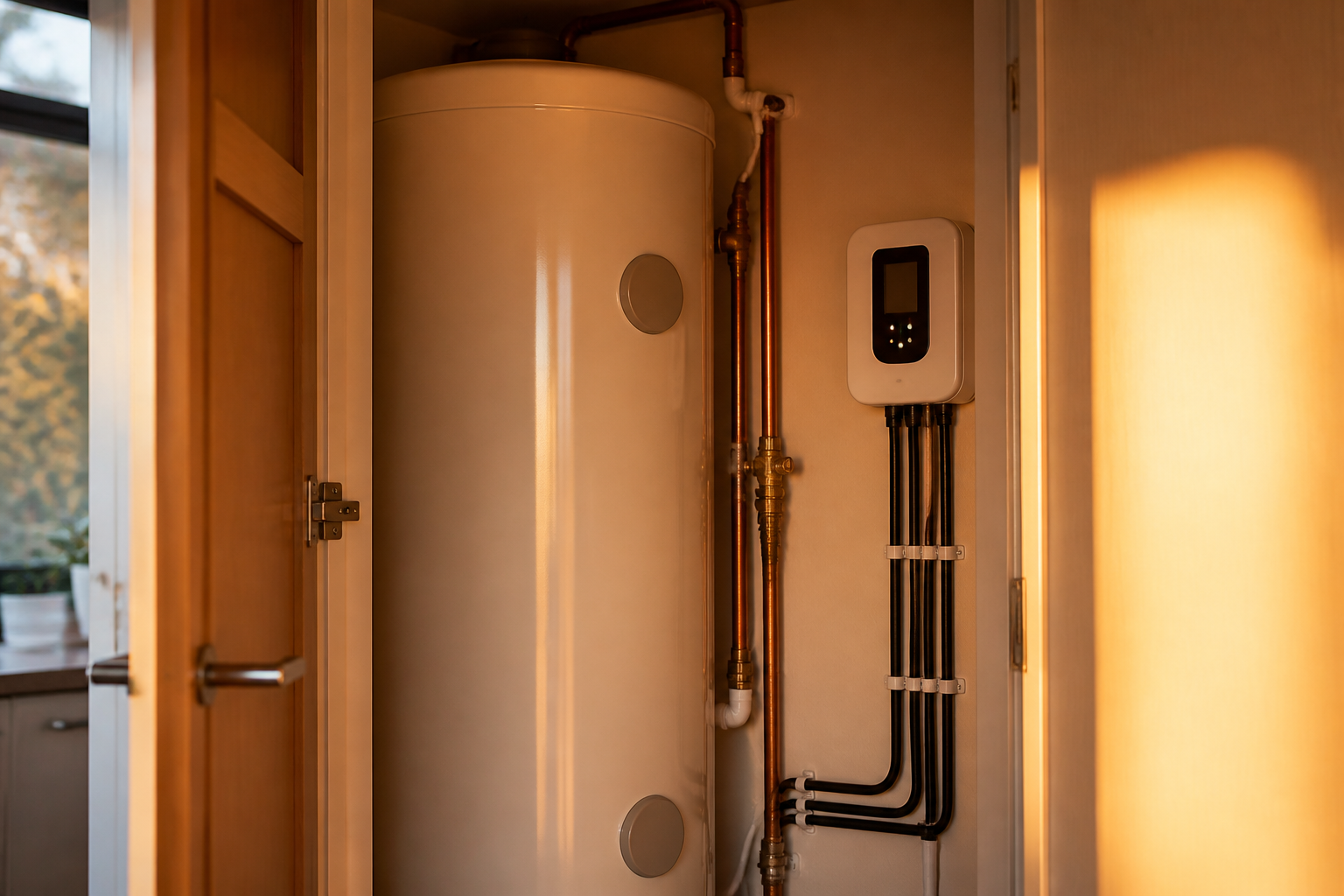
A solar immersion diverter is an electronic control unit installed between your electrical consumer unit and the immersion heater in your hot water cylinder. It relies on a current transformer sensor, known as a CT clamp, attached to the main electricity cable entering your property at the meter.
The CT clamp continuously monitors the direction and volume of electrical current. When it detects that power is flowing out of your home toward the grid, the diverter unit activates. Rather than turning the immersion element fully on or off, the diverter modulates the electrical output in real time, sending anywhere from 100 watts up to 3,000 watts directly to the immersion element.
According to data from the Energy Saving Trust, water heating accounts for approximately 18 percent of an average UK household energy consumption. By automatically balancing water heating against live solar export, a diverter can meet most of a household summer hot water needs without drawing electricity from the grid or firing a central heating boiler.
Technical checks before buying a solar diverter
Before purchasing equipment or booking an installer, you need to verify that your home electrical and heating systems meet a few basic physical criteria.
First, your property must have a hot water storage cylinder equipped with an operational electrical immersion heater. This element is typically a 3kW heating unit fitted into the side or top of the cylinder via a standard 1.5 inch BSP thread. The immersion heater must include a working mechanical safety thermostat to prevent overheating.
Second, your main electrical intake must have sufficient space around the main live tail cable for the CT clamp. If your electrical meter, main fuse, and consumer unit are located in a tight external meter box, your installer will need to confirm whether a wired or wireless CT transmitter can be accommodated.
Third, if your home already features a solar battery storage system, you must consider device prioritisation. Modern home batteries and solar diverters both seek to absorb excess solar power before it reaches the grid. You or your installer must configure the settings so that the battery charges first, ensuring available electricity is reserved for evening household power before excess is diverted to heat water.
| Technical Requirement | Specific Check Needed | Action Required |
|---|---|---|
| Hot Water Cylinder | Must have a functional 3kW immersion heater | Inspect heater switch and thermostat operation |
| Electricity Meter / Main Supply | Space for a Current Transformer clamp on main live cable | Ensure meter tails are accessible near consumer unit |
| Wireless Signal | Signal path between main meter sensor and diverter | Check distance or opt for a hardwired sensor cable |
| Electrical Distribution | Available fused spur or breaker near cylinder | Verify circuit rating with a qualified electrician |
| Battery Storage System | Battery management settings and charge priority | Set battery as priority charge before water heating |
Equipment costs and installation fees
The total cost of adding a solar immersion diverter to your home consists of two parts: the control unit hardware and the qualified electrician installation fee.
Leading UK market units typically cost between £350 and £550 for the hardware and sensor bundle. Additional accessories, such as dual-element relays or wireless sensor extenders, can add £50 to £100 if required by your layout.
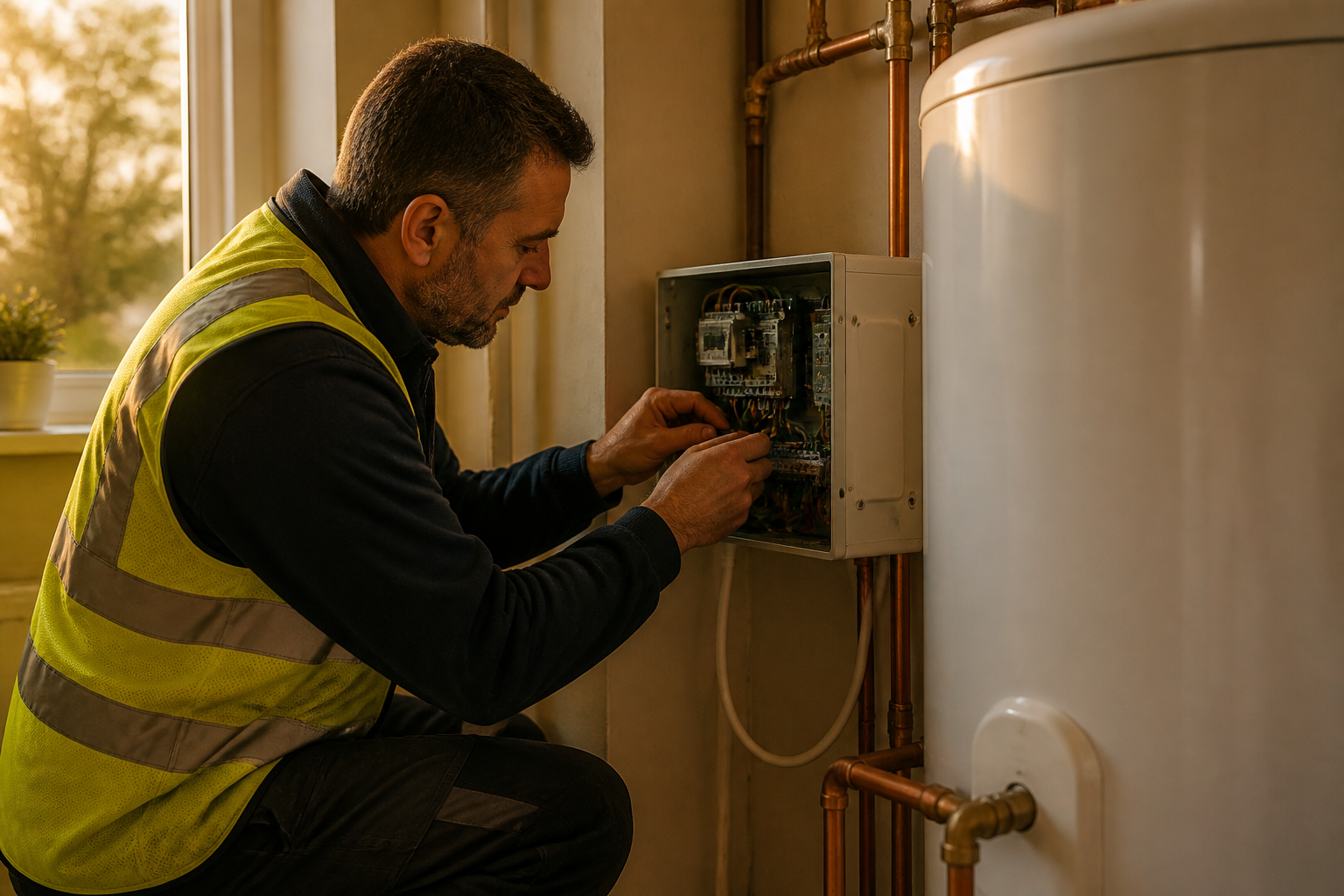
Installation by a qualified electrician generally takes between three and five hours. Labour charges across the UK range from £150 to £350, depending on local rates and whether new cabling must be routed through walls or floorboards. The total installed cost for a complete system usually sits between £500 and £900.
In terms of financial return, a household with a 4 kWp solar PV array typically diverts between 600 kWh and 1,200 kWh of surplus electricity into hot water each year. Based on standard domestic gas tariffs published by Ofgem, replacing gas-fired hot water heating yields annual savings of £70 to £140. If replacing peak-rate grid electricity in a direct electric hot water system, annual savings can exceed £200, delivering a simple payback period of three to six years.
What accreditation to look for and questions to ask
Because a solar immersion diverter interfaces directly with your home electrical distribution board and a high-draw heating element, installation must comply with British Standard BS 7671 (IET Wiring Regulations).
Always choose an electrician who is registered with a recognised competent person scheme, such as NICEIC, NAPIT, or SELECT in Scotland. Look for installers accredited under TrustMark, which confirms adherence to customer service and technical quality standards.
When requesting quotes from installers, ask these four specific questions:
- Will you be installing a wired CT clamp or a wireless sensor, and how is signal reliability guaranteed?
- Will you inspect and test the safety thermostat on my existing immersion heater before commissioning?
- How will the diverter be configured to work alongside my existing smart meter, solar inverter, or home battery?
- Will you provide a BS 7671 Electrical Installation Certificate upon completion of the work?
Installation timeline and step-by-step process
Installing a solar immersion diverter is an efficient process that rarely causes disruption to your daily routine. The complete timeline from initial inquiry to operation follows four distinct stages:
- Initial assessment and quote (1 to 3 days): You provide details or photos of your consumer unit, cylinder, and meter location. The electrician confirms compatibility and provides a fixed quote.
- Equipment delivery (2 to 5 days): The diverter unit and any required installation materials are ordered and delivered.
- On-site installation (3 to 5 hours): On the day of installation, the electrician isolates power briefly to connect the diverter to the consumer unit, mounts the display unit near the cylinder, and connects the CT sensor at the electricity meter.
- Testing and commissioning (1 hour): The installer tests the immersion thermostat cut-out switch, checks sensor telemetry, sets priority levels, and walks you through the display panel controls.
What this means for you
For UK homeowners who already have solar PV panels and a hot water storage tank, installing a solar immersion diverter is one of the most cost-effective ways to increase solar self-consumption. It reduces reliance on fossil fuels during summer, lowers gas bills, and protects central heating boilers from constant seasonal power cycling. If you are exploring broader home energy improvements, the Net Zero Home Scheme provides UK employees with access to pre-vetted, accredited installers for solar, battery, and heat pump technology without salary sacrifice or payroll deduction.
Frequently asked questions
Does installing a solar diverter require DNO approval?
No. A solar immersion diverter operates entirely behind your electricity meter as a standard domestic appliance circuit. It does not alter your peak solar inverter output or export capacity, so you do not need prior approval or notification under Distribution Network Operator (DNO) regulations such as G98 or G99.
Will a solar diverter drain my home storage battery?
No, provided the installer configures the CT clamps or communications correctly. Most modern battery storage systems measure export at the meter and respond within seconds. Setting the battery system to take charging priority ensures that solar electricity fills your battery first and only redirects surplus power to the hot water cylinder once the battery is full.
Can a solar diverter work with a combi boiler?
No. A solar diverter requires a hot water storage cylinder containing an electrical immersion heating element. Combination boilers heat mains water instantly on demand without a storage tank, meaning there is no thermal reservoir available to absorb diverted solar energy.
Sources
- Storing solar energy in hot water, Energy Saving Trust
- Find a registered electrician, NICEIC
- TrustMark Government Endorsed Quality Scheme, TrustMark