The Physics and Economics of Solar PV Self Consumption
Understand the science behind solar generation, how self-consumption impacts energy bills, and the trade-offs of battery storage based on UK data.
- Written by
- Net Zero Home Scheme editorial team
- Last updated
- Topic
- solar energy, home energy, battery storage
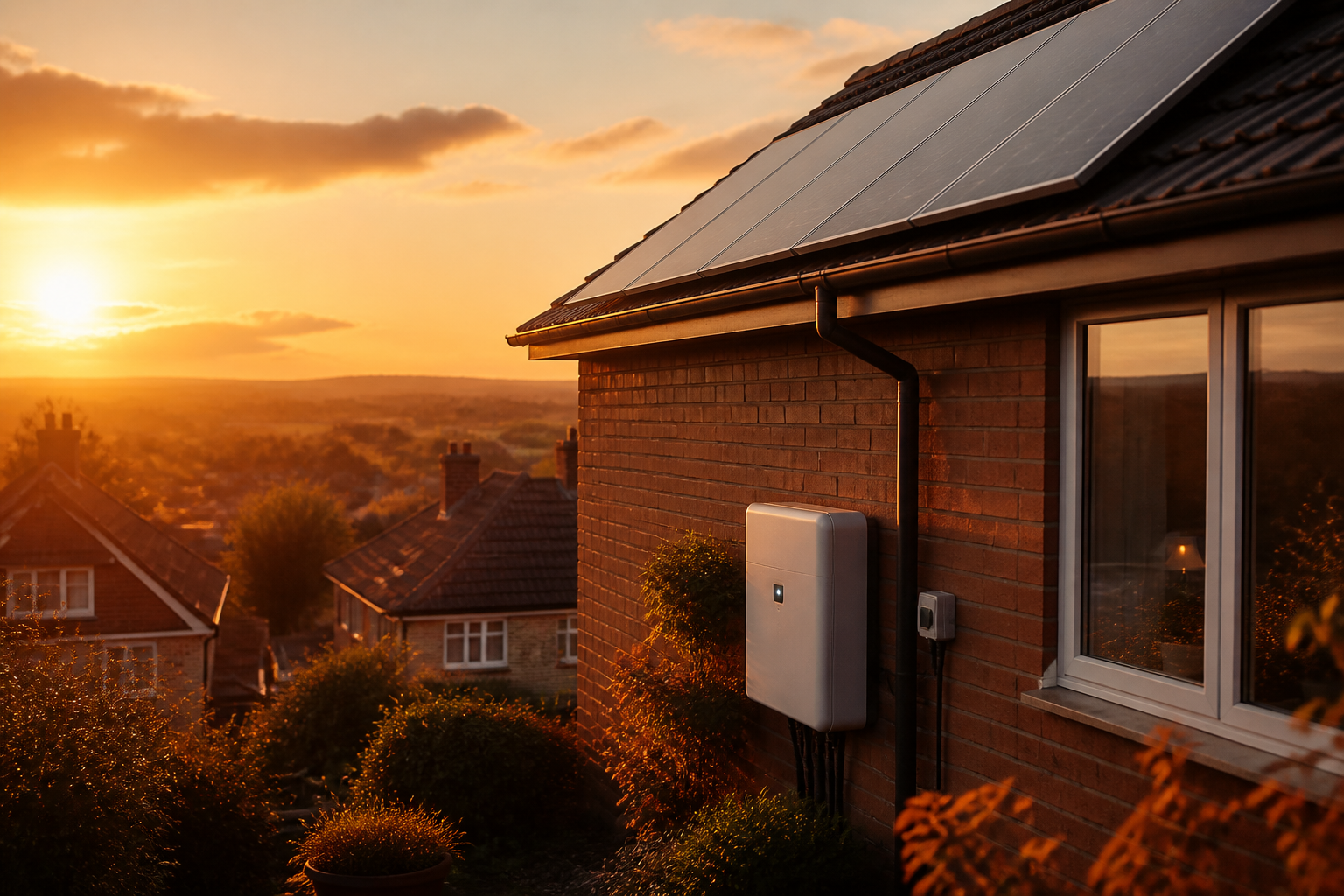
Generating electricity on your roof is one of the most visible ways to lower household carbon emissions, but the true financial and environmental return depends heavily on how much of that power you use yourself. Solar photovoltaics (PV) convert light directly into direct current electricity, which an inverter transforms into alternating current for home use. However, the timing of solar generation rarely matches the timing of domestic energy demand.
Understanding the physics of solar irradiance, the round-trip efficiency of energy storage, and the economics of grid export is essential for making informed decisions about home decarbonisation.
The physics of generation versus household demand
Solar panels generate electricity based on global horizontal irradiance, which includes both direct sunlight and diffuse daylight scattered by clouds. In the UK, total solar radiation varies substantially across the year. According to data published by the Energy Saving Trust, a standard 4 kilowatt-peak (kWp) south-facing solar array in the UK typically generates between 3,400 and 4,200 kilowatt-hours (kWh) of electricity per year. Crucially, roughly 75% to 80% of this generation occurs between April and September.
On a daily scale, solar output forms a bell curve that peaks around solar noon. Conversely, typical UK household demand exhibits a double peak, with high electricity consumption during morning routines (7:00 to 9:00 AM) and evening activities (5:00 to 10:00 PM).
Without intentional energy management or local storage, a home without occupants during the day may export more than 70% of its solar generation back to the national grid. The Energy Saving Trust estimates that an unmanaged household typically achieves a direct self-consumption rate of only 30% to 50%.
The economics of importing, exporting and storing energy
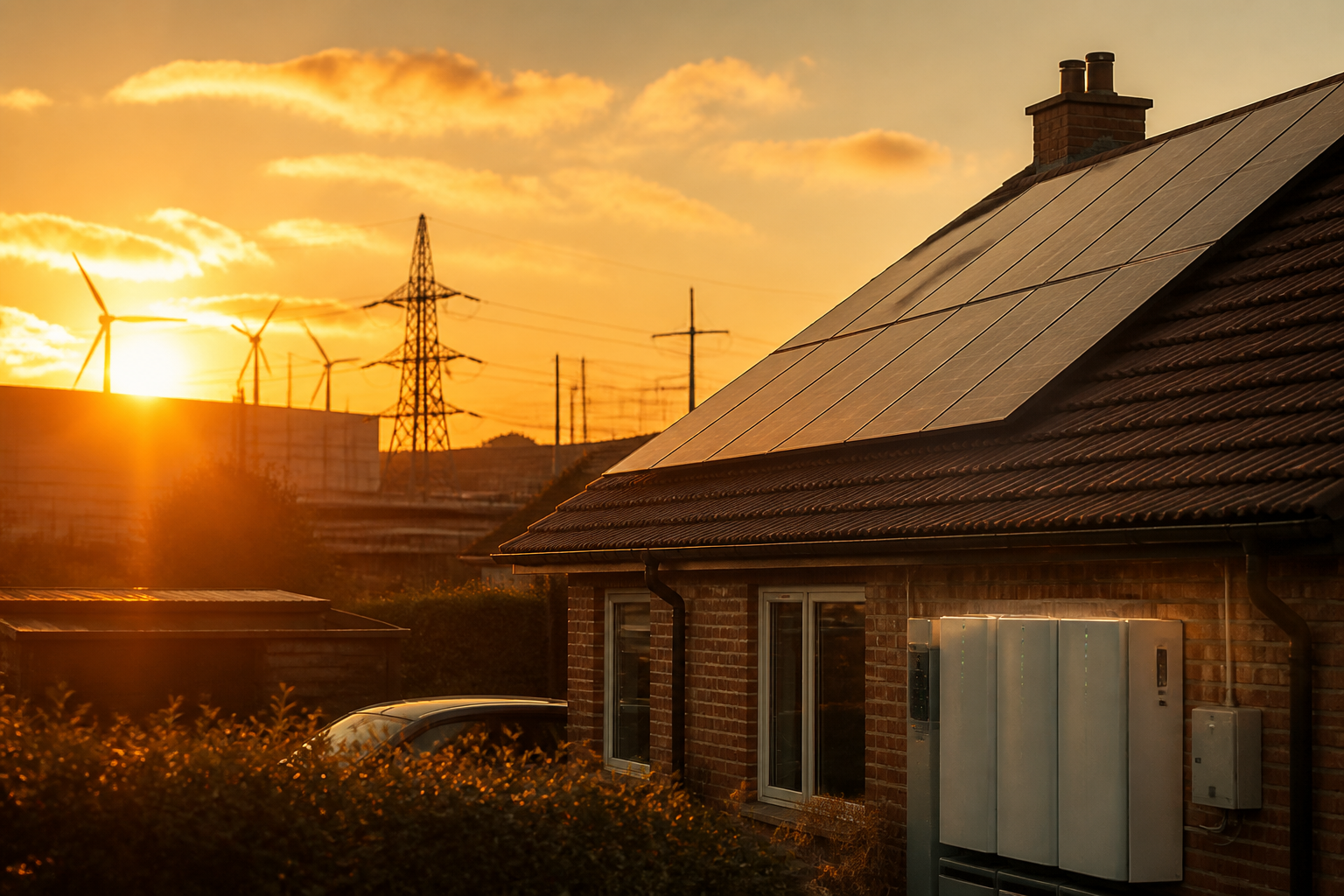
To evaluate the financial return of solar PV, you must compare three distinct values: the cost of importing electricity from the grid, the value of direct self-consumption, and the compensation received for exported energy.
When you use a unit of solar energy directly inside your home, you avoid buying a unit of power from your energy supplier. Under standard domestic tariffs regulated by Ofgem, electricity import prices are significantly higher than the compensation rates provided for exporting power under export schemes like the Smart Export Guarantee (SEG). Under SEG regulations set by Ofgem, licensed energy suppliers with more than 150,000 customers must offer an export tariff, but the set rates vary widely among providers.
Because importing power costs substantially more per kilowatt-hour than exporting it pays, maximizing self-consumption yields the greatest economic benefit. Every kilowatt-hour used directly on site saves the full import rate, whereas exporting that same kilowatt-hour yields only the lower export rate.
Adding home battery storage changes this calculation by storing midday surplus generation for evening use. However, batteries are subject to thermodynamic losses. Modern lithium-ion home batteries have a round-trip efficiency (RTE) between 85% and 92%, according to technical specifications verified under Microgeneration Certification Scheme (MCS) installer standards. This means that for every 10 kWh of solar energy fed into a battery, between 0.8 kWh and 1.5 kWh is lost as heat during the charge and discharge cycles.
Comparing solar self-consumption strategies
The table below outlines the primary methods used to manage excess solar generation, along with their relative efficiency, operational trade-offs, and relative capital expenditure.
| Strategy | Mechanism | Energy Efficiency | Primary Advantage | Trade-Off | Capital Cost |
|---|---|---|---|---|---|
| Direct Consumption | Running appliances during peak daylight hours | ~100% (Instantaneous) | Zero heat loss, zero added hardware cost | Requires manual or automated schedule changes | Minimal (Cost of timers) |
| Solar Immersion Diverter | Diverts surplus power to hot water cylinder immersion heater | ~98% (Electrical to thermal) | Replaces fossil fuel water heating directly | Lower economic value than displacing peak electricity | Low (£300 - £600) |
| Battery Storage System | Chemical storage in lithium iron phosphate (LFP) cells | 85% - 92% (Round-trip) | Displaces expensive evening peak import | Cell degradation over time (cycles and calendar age) | Medium to High (£2,500 - £6,000) |
| Grid Export | Exporting surplus generation under a Smart Export Guarantee (SEG) | ~99% (Inverter loss only) | Requires no extra on-site hardware | Lower financial return per kWh than self-consumption | Zero (Requires smart meter) |
Genuine trade-offs, degradation and winter performance
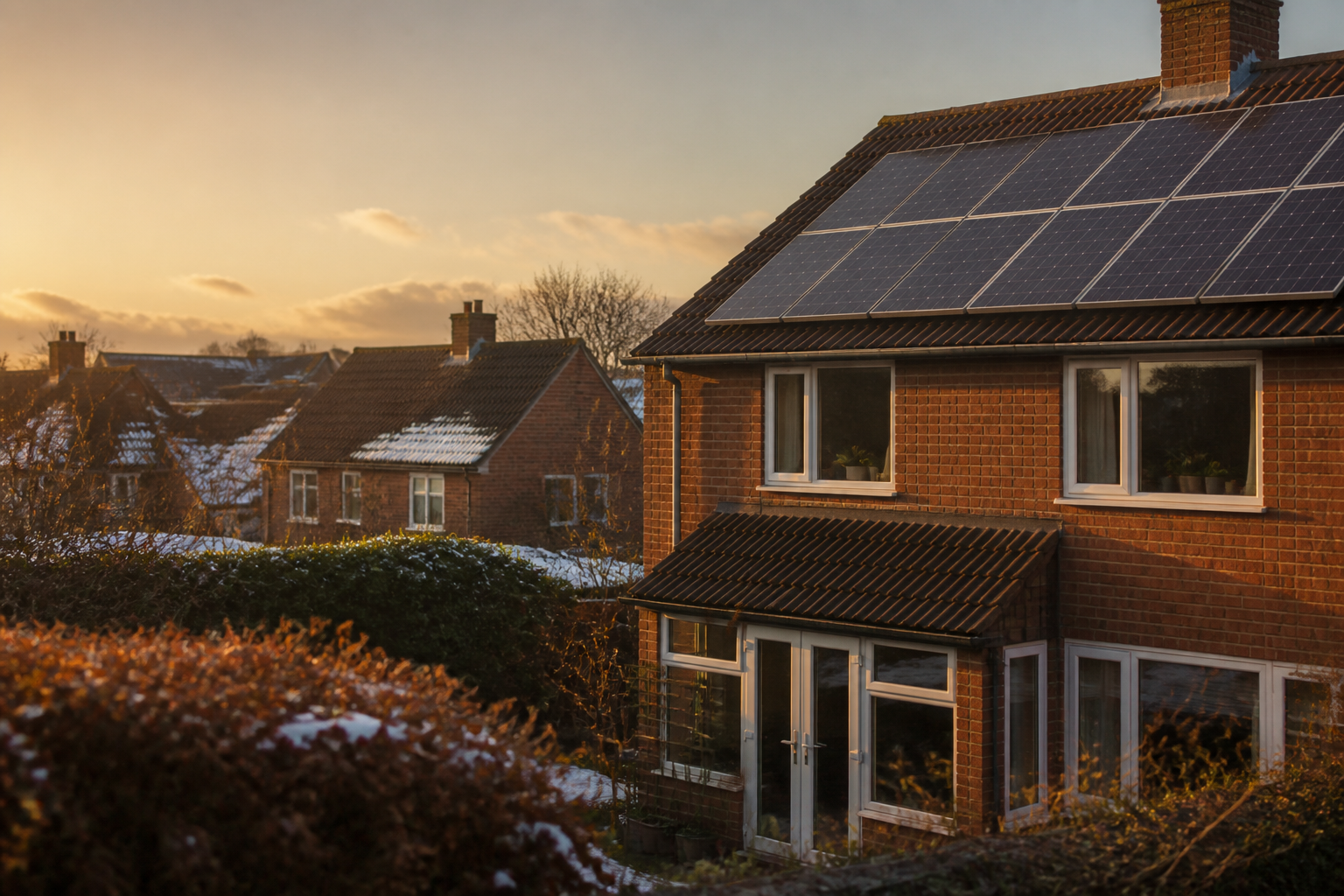
While high self-consumption maximizes bill savings, solar PV and battery storage systems involve key limitations that prospective buyers must weigh fairly.
-
Seasonal Imbalance: In the depths of winter (December and January), a typical 4 kWp solar system in the UK may generate as little as 3 to 5 kWh on a fully overcast day. This generation is often insufficient to fully charge a domestic battery, meaning battery performance benefit is significantly diminished during winter months unless combined with dynamic off-peak grid tariffs.
-
Battery Degradation: Lithium-ion batteries experience both calendar aging and cycle degradation. Over a typical 10-year lifespan or 4,000-cycle warranty period, usable capacity usually drops to around 70% to 80% of original rated capacity.
-
Embodied Carbon: Manufacturing solar panels and lithium-ion batteries requires energy and raw materials. According to lifecycle assessment studies cited by the Climate Change Committee (CCC), a residential solar array in the UK typically repays its embodied carbon footprint within 1.5 to 3 years of operation, depending on the carbon intensity of the grid electricity it displaces.
What this means for you
If you own or are considering a solar PV system, taking small practical steps can significantly increase your self-consumption rate without requiring immediate large investments:
- Audit your daytime baseload: Use your smart meter display to identify background electrical consumption from devices left on standby.
- Shift appliance schedules: Set washing machines, dishwashers, and tumble dryers to run sequentially during peak solar generation hours, typically between 11:00 AM and 3:00 PM.
- Consider hot water diversion: If your home has a hot water cylinder, a solar immersion diverter provides a cost-effective way to store excess energy thermally rather than chemically.
- Evaluate dynamic tariffs: Look for energy tariffs that offer variable pricing, allowing you to top up storage batteries at cheaper night rates during winter when solar yield is low.
- Ensure accredited installation: Always use an installer certified by the Microgeneration Certification Scheme (MCS) and registered with a consumer code like RECC or HIES to guarantee standards and warranty protection.
For employees seeking accessible pathways to clean technology, employer platforms like the Net Zero Home Scheme offer structured access to accredited solar, heat pump, and battery storage installations without salary sacrifice or payroll deductions.
Frequently asked questions
Do solar panels generate electricity on cloudy days in the UK?
Yes. Solar PV panels convert both direct sunlight and diffuse daylight into electricity. While generation drops during heavy cloud cover to around 10% to 25% of peak capacity, panels continue producing power throughout daylight hours year-round.
Is a home battery required to benefit from solar panels?
No. A battery increases self-consumption by storing surplus power, but it is not mandatory. Homes without batteries still achieve substantial bill savings by running high-draw appliances during the day and exporting remaining surplus power under an export tariff.
How long does a solar PV system last?
According to the Energy Saving Trust, modern solar panels carry linear performance warranties of 25 years, typically guaranteeing at least 80% of original output after a quarter-century. Solar inverters generally last between 10 and 15 years before requiring replacement.
Sources
- Solar Panels Guide, Energy Saving Trust
- Smart Export Guarantee (SEG) Guidance, Ofgem
- Standards and Quality Assurance, Microgeneration Certification Scheme (MCS)
- Sixth Carbon Budget, Climate Change Committee