Plug-in Solar Rules Change in August: What UK Homes Need to Know
New UK regulations for plug-in solar panel kits take effect in August 2026. Here is what changes for home safety, grid compliance, and household energy bills.
- Written by
- Net Zero Home Scheme editorial team
- Last updated
- Topic
- plug-in solar, uk energy news, solar pv
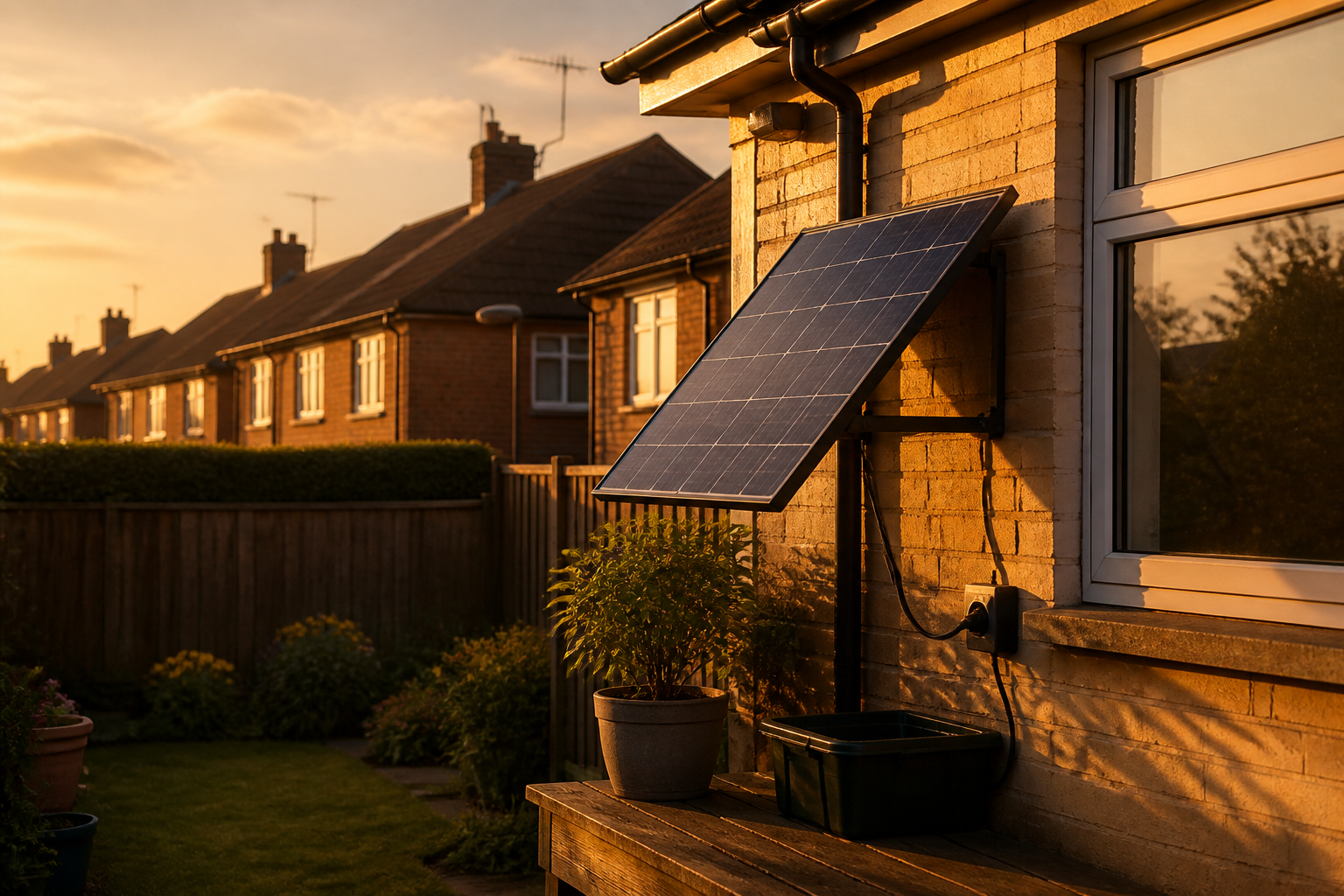
In late July 2026, standardisation bodies and consumer guidance groups, including the Energy Saving Trust, highlighted updated rules governing plug-in solar panel kits in Great Britain taking effect from August 2026. Plug-in solar panels, often referred to as balcony solar, allow householders to generate electricity from small photovoltaic (PV) panels and feed power directly into a standard domestic socket using an integrated micro-inverter.
While these compact systems have seen widespread adoption across mainland Europe, UK grid operators, electrical standard bodies, and safety regulators have clarified the technical and legal framework required for safe operation in British homes. At the same time, updated energy market forecasts published by Cornwall Insight on 22 July 2026 and research reported by Energy Live News on 20 July 2026 highlight how small-scale generation fits into the wider picture of household energy decarbonisation.
Here is a clear breakdown of what the August 2026 plug-in solar rule updates introduce, how these systems compare to traditional rooftop installations, and what you need to evaluate before purchasing equipment.
What are the updated August 2026 plug-in solar rules?
The updated framework coming into force in August 2026 establishes clear technical benchmarks for small-scale plug-in photovoltaic systems operating under 800 watts (0.8 kW). Historically, uncertainty surrounding UK electrical wiring standards (specifically BS 7671) led to confusion over whether plugging a power-generating device into a standard 13-amp wall socket was compliant with domestic wiring regulations.
Under the clarified guidelines, plug-in solar systems must meet three core requirements:
- Micro-inverter compliance and anti-islanding: The micro-inverter attached to the panel must be certified to BS EN 62109 safety standards and feature automatic disconnect capability (anti-islanding protection). If grid power cuts out, the inverter must stop feeding power within milliseconds to prevent back-feeding electricity into dead cables, which poses a severe hazard to line technicians.
- Grid notification via Engineering Recommendation G98: Although individual plug-in units under 16 amps per phase (3.68 kW) do not require advance grid permission, householders or installers are legally required to notify their local Distribution Network Operator (DNO) within 28 days of connection using the G98 notification process.
- Circuit protection and RCD requirements: The electrical socket used to connect the system must be protected by a Residual Current Device (RCD). Additionally, regulations advise that systems should ideally be plugged into a dedicated circuit or evaluated to ensure the total current on a ring main does not exceed safety thresholds during peak generation.
These changes provide legal clarity for consumers while establishing guardrails against uncertified imported kits that lack proper anti-islanding mechanisms.
How plug-in solar compares to traditional rooftop PV
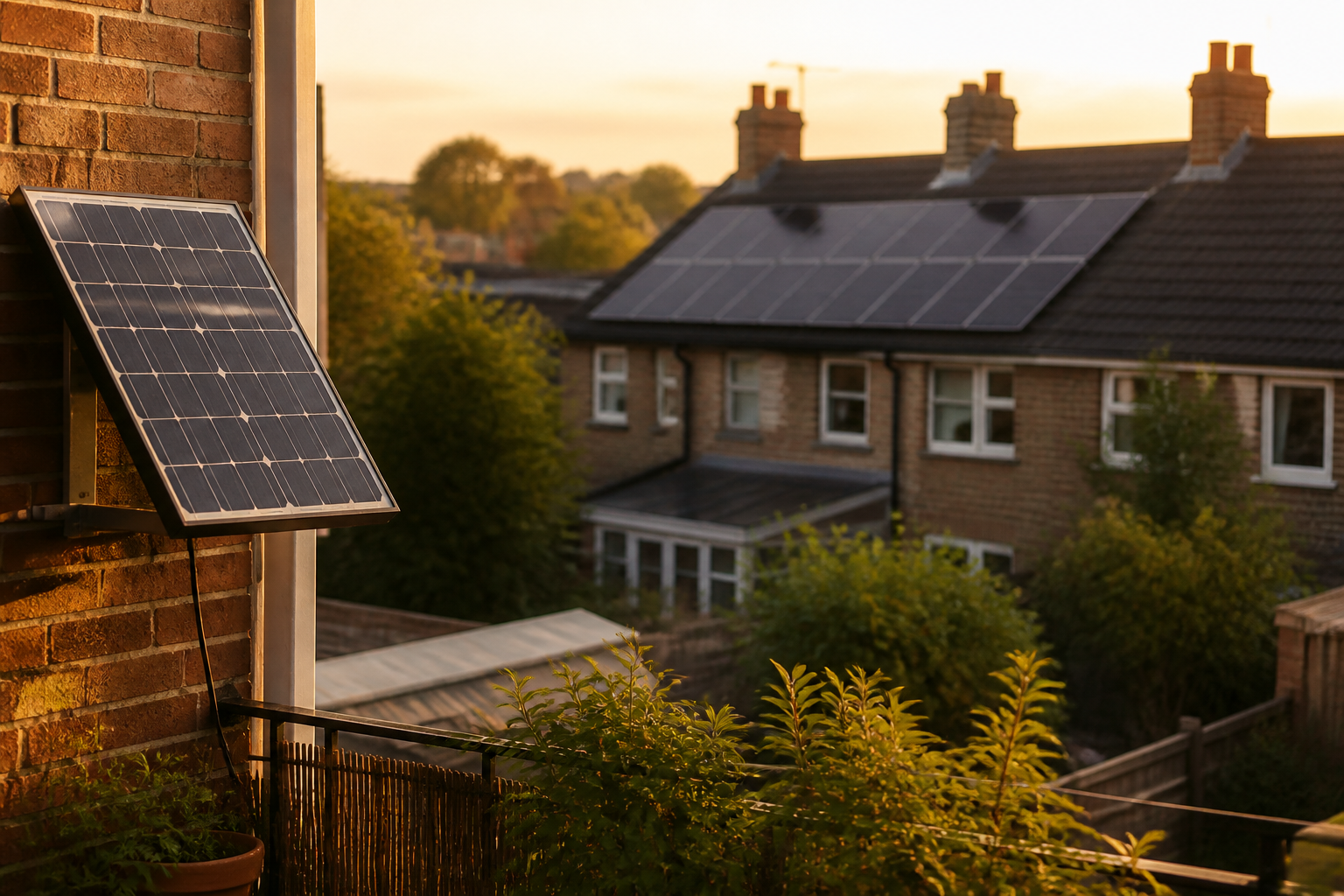
Plug-in solar kits offer a lower entry cost and simpler installation, but they differ significantly from standard rooftop solar installations in capacity, durability, grid interaction, and long-term financial returns.
| Metric | Plug-in Solar Kits | Standard Rooftop Solar PV |
|---|---|---|
| Typical Peak Capacity | 300 W to 800 W (0.3 to 0.8 kWp) | 3,000 W to 6,000 W (3.0 to 6.0 kWp) |
| Installation Method | DIY or light mounting, plugs into 13A socket | Hardwired by accredited professionals |
| Standards & Accreditation | BS EN 62109 micro-inverter compliance | MCS, TrustMark, NICEIC certification |
| DNO Connection | G98 notification post-installation | G98 notification or G99 prior approval |
| Export Tariffs (SEG) | Rarely eligible without MCS certificate | Full eligibility for Smart Export Guarantee |
| Battery Integration | Limited to small modular units | Full integration with home battery storage |
| Primary Best Use | Rented homes, flats, baseline daytime cover | Whole-house energy offset, EV charging |
Traditional rooftop installations certified under the Microgeneration Certification Scheme (MCS) remain the standard route for home generation in England, Scotland, and Wales. MCS registration is required by most energy suppliers before they will issue a Smart Export Guarantee (SEG) contract, which pays householders for excess electricity exported back to the national grid. Because plug-in solar kits generally lack MCS installation certificates, most generated power must be consumed immediately within the home to deliver any financial value.
The broader home energy picture: Tariffs, batteries, and heat pumps
Understanding small-scale solar requires looking at the broader context of UK household energy costs. On 22 July 2026, market analyst Cornwall Insight revised its October price cap forecasts downwards, reflecting adjustments to VAT structures and underlying wholesale market shifts. However, energy prices remain substantially higher than pre-2021 historical baselines, keeping energy efficiency at the top of householder priorities.
Recent analysis published by Energy Live News on 20 July 2026 highlighted that combining low-carbon technologies, such as solar PV, home battery storage, and heat pumps, can reduce household import reliance by more than 80% when paired with smart, time-of-use tariffs.
However, technology performance depends heavily on correct design and installation standards. As reported by Yahoo News UK on 20 July 2026, householders upgrading to heat pumps occasionally experience higher running costs than expected if system design is flawed. To deliver optimal efficiency, heat pumps require:
- High Seasonal Coefficient of Performance (SCOP): Systems should aim for an SCOP of 3.5 to 4.0, meaning the unit generates 3.5 to 4 units of heat for every 1 unit of electricity consumed.
- Low flow temperatures: Operating flow temperatures at or below 45 degrees Celsius ensures high efficiency, requiring correctly sized radiators or underfloor heating.
- Tariff alignment: Coupling heat pumps with dynamic or off-peak tariffs allows thermal storage or hot water cylinders to charge when grid electricity is cheapest.
When plug-in solar, rooftop PV, or heat pumps are considered, matching the technology to the property's physical characteristics and tariff structure is essential.
What this means for you
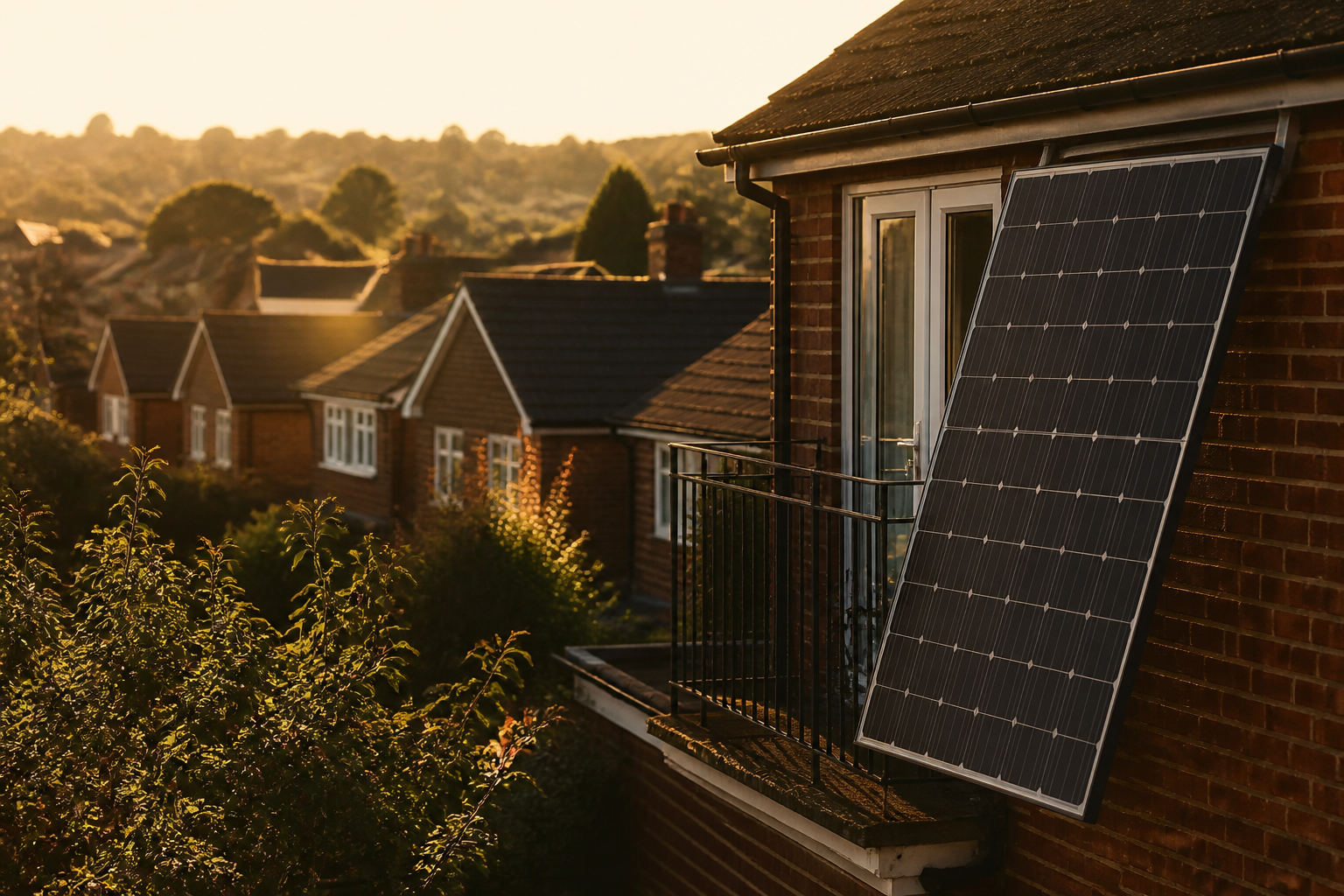
If you are considering home energy improvements in light of the August 2026 guidance, follow these checkable steps to determine the right path for your property:
- Assess tenure and permissions: If you rent your property or live in a leasehold flat, plug-in solar kits offer a portable option, though landlord or freeholder consent may still be required for external mounting brackets.
- Verify safety certifications: Before buying any plug-in solar equipment, confirm that the inverter explicitly carries BS EN 62109 certification and includes built-in anti-islanding protection. Avoid unbranded imported kits lacking verified UK documentation.
- Complete DNO G98 notification: Ensure that you or your supplier submit a G98 form to your local Distribution Network Operator within 28 days of plugging in your kit.
- Calculate baseline daytime load: A 600W plug-in system generates approximately 450 to 550 kWh of electricity per year under UK climate conditions. Ensure your household has enough background electrical load (refrigerators, internet routers, home office equipment) during daylight hours to absorb this power without exporting it unpaid.
- Consider accredited installation for full-scale systems: If you own your home and wish to maximize generation, install battery storage, or qualify for Smart Export Guarantee payments, an MCS-accredited installer ensures compliance with RECC, HIES, and TrustMark consumer protection codes.
For employees whose organisations participate in home energy benefits, programs such as the Net Zero Home Scheme provide structured access to vetted installers, accredited hardware, and tariff optimization tools without salary sacrifice or payroll deductions.
Frequently asked questions
Do I need permission from my landlord or DNO to install plug-in solar?
You do not need prior permission from your Distribution Network Operator (DNO) for plug-in systems generating under 3.68 kW per phase, but you are required by law to submit a G98 notification within 28 days of connection. If you rent your home or hold a leasehold title, you must review your tenancy agreement or leasehold terms regarding external fixtures on balconies or walls.
Can I earn Smart Export Guarantee (SEG) payments from a plug-in solar kit?
In almost all cases, no. Energy suppliers require an MCS (Microgeneration Certification Scheme) installation certificate to enroll a household in a Smart Export Guarantee tariff. Because plug-in solar kits are usually self-installed, they lack MCS certification. Any excess power generated by a plug-in kit that is not consumed immediately will flow back into the grid without generating export payments.
How much electricity can a 600W plug-in solar panel kit generate in the UK?
In Great Britain, a south-facing 600W (0.6 kWp) panel set installed at an optimal angle of 30 to 35 degrees generates roughly 450 to 550 kWh per year. Actual output varies based on geographic location, shading, angle, and seasonal daylight variations, with up to 80% of generation occurring between April and September.
Sources
- New plug-in solar panel rules come into force in August across the UK, AOL.co.uk
- Plug-in solar panels and the rooftop revolution, Energy Saving Trust
- Cornwall Insight lowers October price cap forecast after VAT cut, Solar Power Portal
- Combining low-carbon technologies could cut household energy bills by more than 80%, Energy Live News
- Why your heat pump isn’t saving you money – and what could change that, Yahoo News UK