Upgrading Your Hot Water Cylinder: A UK Homeowner Guide
A practical guide to choosing, sizing, and installing a hot water cylinder for low-carbon heat sources, solar PV, and smart tariffs.
- Written by
- Net Zero Home Scheme editorial team
- Last updated
- Topic
- hot water, heat pumps, solar pv
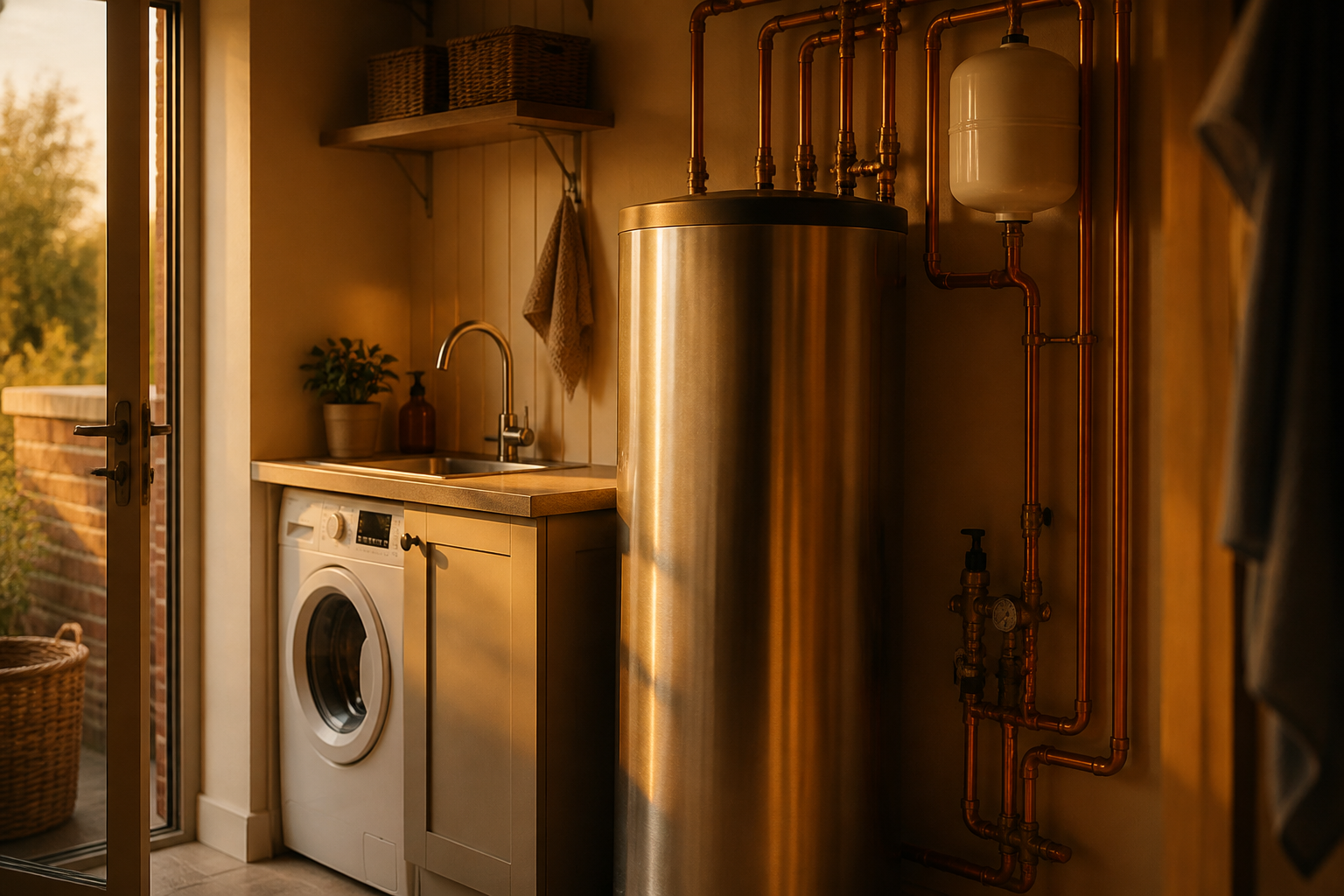
Many UK home energy upgrades focus on solar panels or heat pumps, yet the hot water cylinder remains the primary thermal storage vessel in most dwellings. Upgrading an aging vented cylinder to a modern, high-efficiency unvented model or a heat-pump-ready vessel allows households to store energy efficiently, take advantage of off-peak electricity tariffs, and prepare for low-carbon heating transitions. According to figures published by the Energy Saving Trust, domestic hot water accounts for roughly 18% of a typical UK home energy footprint. Replacing an old cylinder with a modern vessel insulated to current Building Regulations standards can reduce daily standing heat losses significantly, preserving stored energy for when household demand peaks.
What to check before selecting a new cylinder
Before purchasing a hot water cylinder, a thorough assessment of your property plumbing infrastructure and spatial layout is required.
First, test your incoming cold water mains pressure and flow rate. Unvented hot water cylinders connect directly to the cold water main, delivering hot water across all taps at mains pressure without needing cold water storage tanks in the loft. According to guidance from the Chartered Institute of Plumbing and Heating Engineering (CIPHE), an unvented system requires a minimum dynamic mains pressure of 1.5 bar and a flow rate of at least 20 litres per minute at the incoming stopcock to perform as designed. If your dynamic pressure falls below 1.0 bar or your flow rate is beneath 12 litres per minute, an unvented cylinder may deliver poor shower performance unless installed alongside an accumulator tank or a boosted cold water mains pump.
Second, check physical space and floor loading capacity. A standard 250-litre stainless steel hot water cylinder weighs approximately 45 kg empty, but when filled with water, its operational mass exceeds 295 kg. Installing a vessel of this volume in a first-floor cupboard or loft space requires structural verification to ensure timber joists can safely support concentrated loads exceeding 3 kN per square metre. Access routes must also be measured carefully, as high-efficiency cylinders feature thick polyurethane foam insulation layers that add 100 mm to 150 mm to the overall external diameter.
Sizing and internal coil specifications
Selecting the correct vessel volume and internal heat exchanger coil specification is critical when planning for low-carbon heating technologies.
Standard indirect cylinders designed for conventional gas or oil boilers use internal heating coils calibrated for flow temperatures between 70°C and 80°C, typically featuring a surface area between 0.6 m² and 1.0 m². However, air source and ground source heat pumps operate most efficiently at lower flow temperatures between 45°C and 55°C. According to MCS standards (MIS 3005), a hot water cylinder connected to a heat pump requires a high-performance coil with a surface area typically between 2.0 m² and 3.2 m². This expanded surface area ensures rapid heat transfer into stored water without forcing the heat pump compressor to work at elevated, inefficient temperatures.
For sizing, the Energy Saving Trust recommends budgeting between 30 and 45 litres of cylinder capacity per occupant per day for general domestic use. A three-bedroom house with four occupants using standard showers typically requires a 200 to 250-litre cylinder. If you intend to heat water using excess rooftop solar generation via an immersion diverter or shift water heating entirely to off-peak night electricity tariffs, sizing up to a 300-litre cylinder provides additional thermal battery capacity, storing low-cost energy for daytime use.
Expected costs and realistic installation timeline
Upgrading a hot water cylinder involves hardware purchase, structural plumbing modifications, safety discharge pipe routing, and electrical connections.
According to industry benchmark figures from the Energy Saving Trust, replacing a standard cylinder like-for-like generally costs between £1,500 and £2,500 including hardware, labour, and VAT. Upgrading from an open-vented gravity system with loft tanks to a high-performance unvented cylinder with a large-surface coil designed for low-carbon heating typically ranges between £2,500 and £4,000.
A typical cylinder replacement installation follows a structured timeline over one to two working days:
- Day 1 morning: Water system isolation, full system drain-down, and removal of the old cylinder and open loft tanks.
- Day 1 afternoon: Structural positioning of the new cylinder, upgrading primary pipework to 22 mm or 28 mm copper, and routing the safety tundish discharge pipe.
- Day 2 morning: Electrical wiring for dual thermostats, motorized zone valves, and smart immersion controls.
- Day 2 afternoon: Pressure testing, system flushing, safety valve checks, commissioning, and Benchmark logbook completion.
What accreditation to check and questions to ask your installer
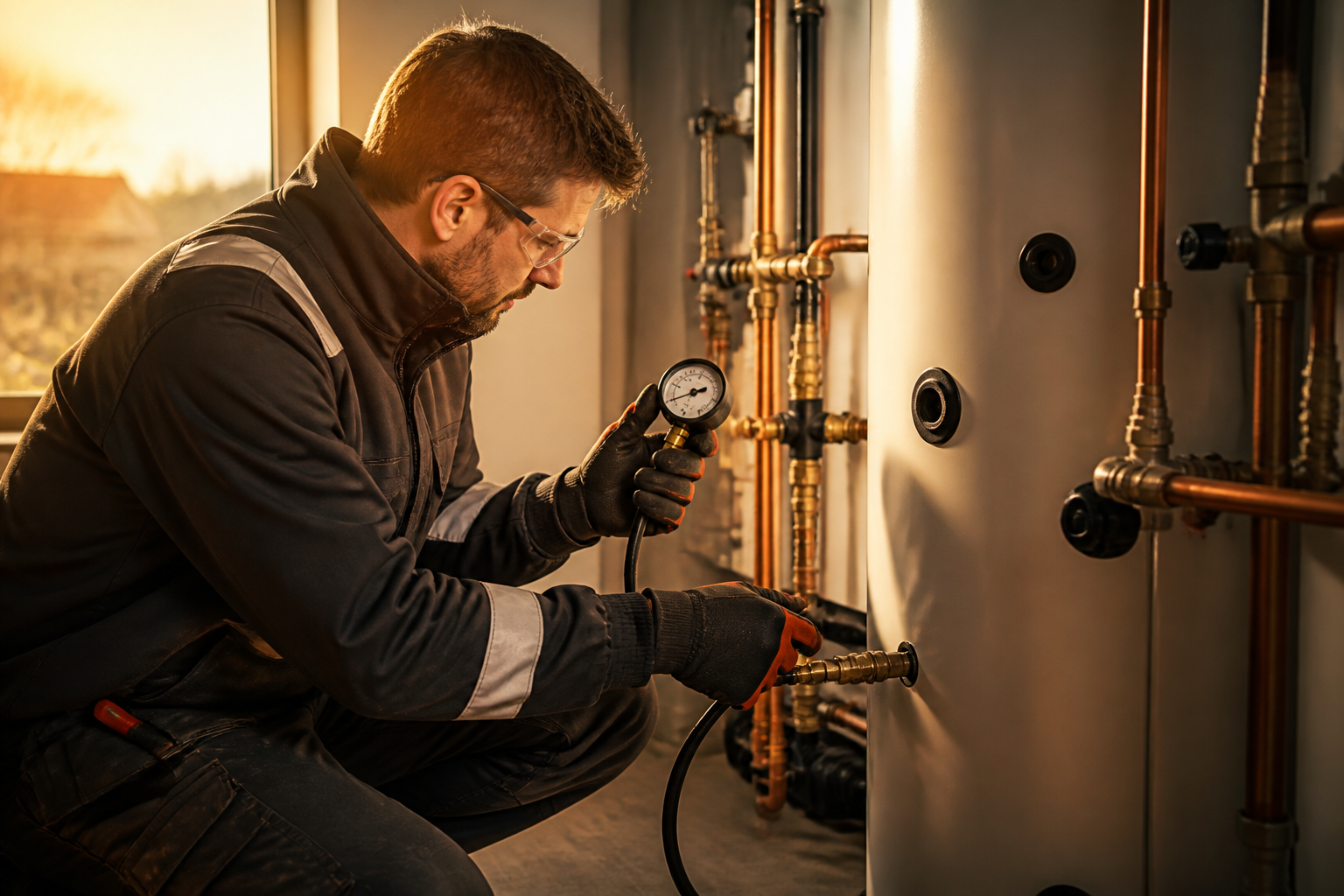
Unvented hot water storage systems fall under strict statutory safety regulation in England and Wales under Approved Document G (Section G3) of the Building Regulations, with equivalent mandatory standards under Scottish Building Standards.
Because unvented cylinders store water under pressure, improper installation presents risk of over-pressurisation. Installers must hold a valid G3 Unvented Hot Water qualification and register the installation with local building control, usually managed through a competent person scheme such as NICEIC, APHC, or CIPHE.
When evaluating prospective installers, ask these four technical questions:
- Do you hold a current Building Regulations Part G3 unvented hot water qualification?
- What is the precise surface area in square metres of the internal exchanger coil, and is it sized for low-temperature heat pump operation?
- Where will the D2 pressure relief discharge pipe be routed, and does the discharge termination comply with safety distance regulations?
- Will you issue a completed Benchmark Commissioning Checklist and register the installation with building control upon completion?
Hot water cylinder specification breakdown
| Feature | Vented Cylinder | Standard Unvented Cylinder | Heat Pump Unvented Cylinder |
|---|---|---|---|
| Water Supply Source | Loft cold water tank | Direct mains supply | Direct mains supply |
| Typical System Pressure | 0.2 bar to 0.5 bar | 2.0 bar to 3.5 bar | 2.0 bar to 3.5 bar |
| Heat Exchanger Surface Area | 0.5 m² to 0.8 m² | 0.8 m² to 1.2 m² | 2.0 m² to 3.2 m² |
| Daily Standing Heat Loss (200L) | 1.8 kWh to 2.5 kWh | 1.0 kWh to 1.4 kWh | 0.9 kWh to 1.2 kWh |
| Qualification Required | NVQ Level 2 Plumbing | Building Regs Part G3 | Part G3 + MCS MIS 3005 |
| Solar Diverter Compatibility | Moderate | High | High |
What this means for you
Upgrading your hot water cylinder transforms your home thermal storage capability, improving shower pressure while reducing daily standing energy losses. Selecting a cylinder with a large internal coil surface area ensures compatibility with future low-carbon heat sources, allowing you to store low-cost off-peak power or excess rooftop solar energy efficiently. Employees whose workplaces participate in the Net Zero Home Scheme can access member pricing on low-carbon home technology installations delivered by accredited installers across England, Scotland and Wales.
Frequently asked questions
Do I need an unvented cylinder to install a heat pump?
While an unvented cylinder is not legally mandatory, heat pumps require specialized large-surface coils that are almost exclusively manufactured within modern unvented cylinders or thermal stores. Older vented cylinders rarely offer the coil surface area required to transfer heat efficiently at lower heat pump flow temperatures.
How long does replacing a hot water cylinder take?
A direct replacement of an existing cylinder typically takes one full day. Converting an old open-vented gravity system with loft storage tanks to a modern unvented cylinder usually takes two full days due to additional pipework rerouting, electrical wiring, and pressure discharge line fitting.
Can I store excess solar PV energy in a hot water cylinder?
Yes, hot water cylinders operate effectively as thermal energy batteries. By installing a solar immersion diverter, excess electricity generated by solar panels is automatically directed to the cylinder immersion heater rather than being exported to the electricity grid. A standard 250-litre cylinder heated from 15°C to 60°C can store approximately 13 kWh of thermal energy.
Sources
- Energy Saving Trust - Storing water efficiently, Energy Saving Trust
- Approved Document G - Sanitation, hot water safety and water efficiency, HM Government
- MCS Standards and Guidance, Microgeneration Certification Scheme