How Heat Pump Flow Temperature Drives Efficiency and Bills
Lowering your heat pump's flow temperature cuts electricity use, but requires the right balance of radiator surface area and home insulation.
- Written by
- Net Zero Home Scheme editorial team
- Last updated
- Topic
- heat pumps, energy efficiency, home heating
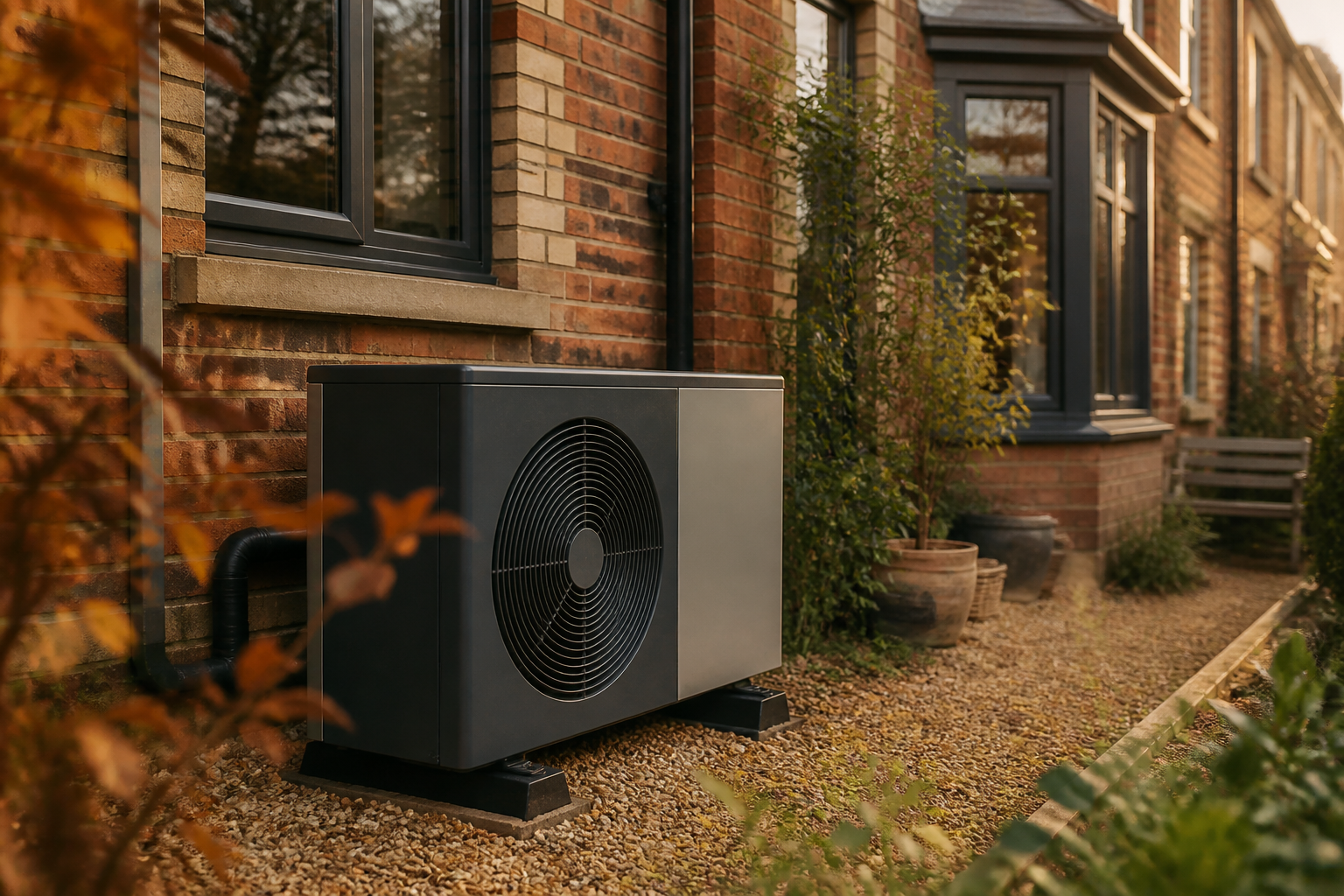
Heat pumps do not generate heat from burning fuel; they capture ambient heat from the outside air or ground and move it inside your home using electrical power. The temperature of the water leaving the heat pump to warm your radiators or underfloor heating, known as the flow temperature, dictates how hard the compressor works and how much electricity it uses. Understanding the physics and economics of heat pump flow temperatures helps you evaluate whether heat pump technology fits your property and how to operate it efficiently.
The thermodynamics of heat pump flow temperatures
The fundamental measure of heat pump efficiency is the Coefficient of Performance (COP). A COP of 3.0 means the heat pump delivers 3 kWh of heat energy into your home for every 1 kWh of electricity consumed. Heat pump performance relies on thermodynamic principles described by the Carnot cycle, where efficiency depends directly on the temperature difference between the heat source (outdoor air) and the heat sink (the water in your heating system).
When the outdoor temperature is 7°C and your heat pump delivers water at a low flow temperature of 35°C, the temperature difference is small. The compressor operates under light mechanical pressure, routinely achieving a COP between 3.5 and 4.5. However, if the system must raise water to a high flow temperature of 55°C or 65°C under the same outdoor conditions, the compressor works significantly harder, lowering the COP to between 2.2 and 2.8.
Over an entire heating season, total efficiency is recorded as the Seasonal Coefficient of Performance (SCOP). Real-world data from the Energy Systems Catapult Electrification of Heat Demonstration Project, which monitored over 700 heat pumps installed across diverse UK housing types, showed an average SCOP of 2.80 across all property types. Homes designed or upgraded to operate at low flow temperatures consistently achieved seasonal efficiencies above 3.2.
How lower temperatures affect heat emitter design
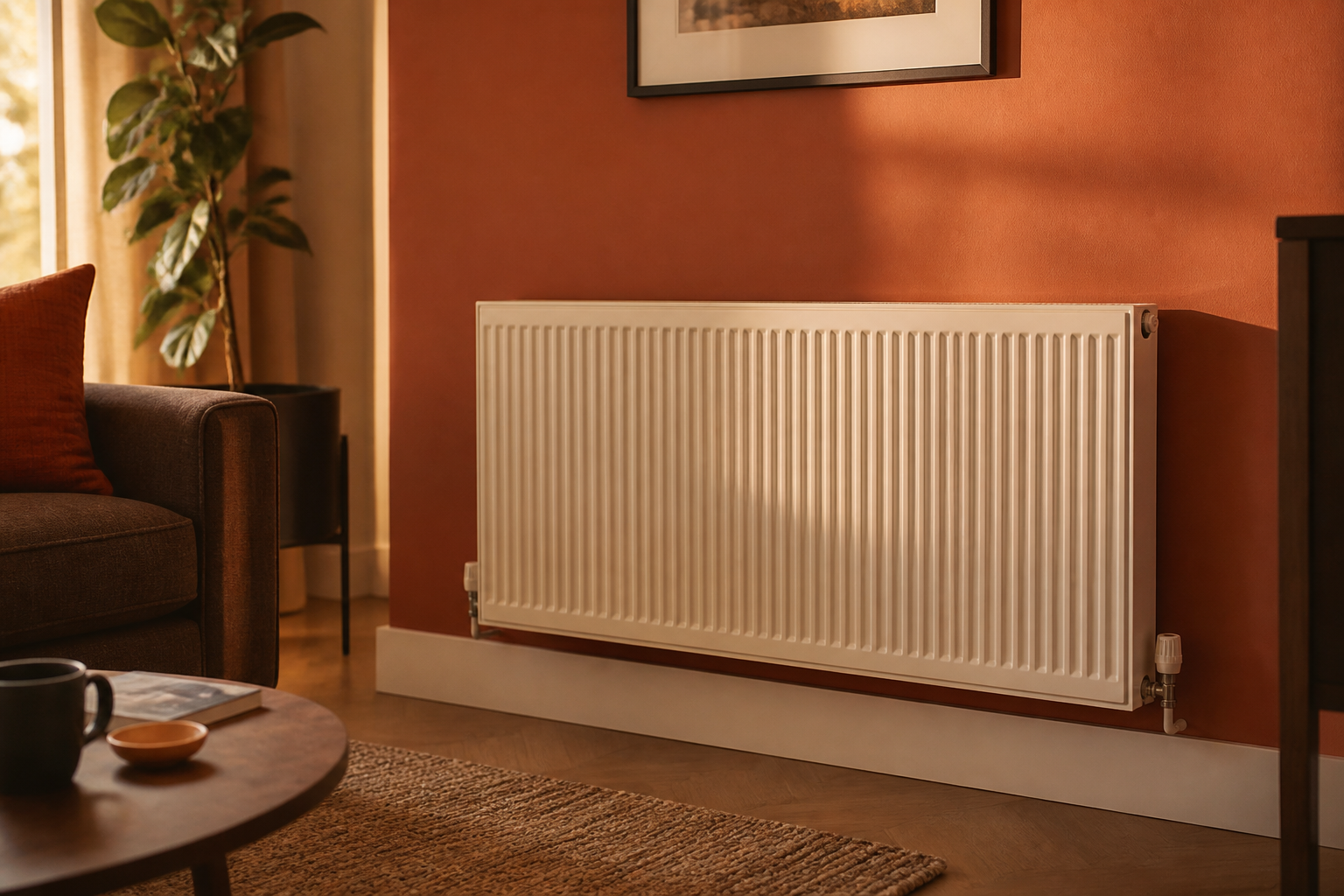
Traditional UK gas boilers operate at flow temperatures between 60°C and 70°C. High water temperatures allow compact radiators to output large amounts of thermal energy quickly, heating cold rooms in short bursts. Heat pumps operate most efficiently at flow temperatures between 35°C and 45°C, which requires a shift in how thermal energy is distributed into a room.
The heat output of any radiator depends on two variables: its surface area and the difference between its surface temperature and the room air temperature. When you reduce water flow temperature from 65°C to 45°C, the heat output of an existing radiator drops by roughly 50 percent. To maintain the same comfort levels on cold winter days, you must increase the surface area of your heat emitters.
| Flow Temperature (°C) | Average Heat Pump COP | Emitter Requirement | Ideal Property Application |
|---|---|---|---|
| 35°C | 4.0 - 4.8 | Underfloor heating or oversized radiators | High insulation, new builds, retrofit upgrades |
| 45°C | 3.2 - 3.8 | Double-convector (Type 22/33) radiators | Standard insulated post-1990 homes |
| 55°C | 2.5 - 3.0 | Standard existing radiators | Uninsulated homes with high thermal loss |
| 65°C | 2.0 - 2.4 | Standard existing radiators | High heat loss, uninsulated period homes |
Increasing emitter surface area does not always require installing massive units in every room. Moving from single-panel (Type 11) radiators to double-panel, double-convector (Type 22) radiators doubles the effective surface area while occupying the same wall length and height.
The running cost equation: spark gap and efficiency
To evaluate the economic performance of a heat pump compared to a gas boiler, you must consider the spark gap, which is the price ratio between electricity and natural gas per kilowatt-hour. In the UK, standard unit rates for electricity are historically around three to four times higher than gas due to policy charges and gas-fired electricity generation costs.
According to analysis published by the Energy Saving Trust, if electricity costs 24p per kWh and gas costs 6p per kWh, the price ratio is exactly 4.0. In this scenario, a heat pump must achieve an average SCOP of 4.0 over the year just to match the basic running costs of a 100 percent efficient gas boiler. Because modern gas boilers operate at roughly 85 to 90 percent seasonal efficiency, an SCOP of 3.5 is typically the financial breakeven point.
When a heat pump runs at a low flow temperature of 35°C to 40°C, achieving an SCOP of 3.5 to 4.0 is realistic, delivering lower running costs than gas. Conversely, if a system operates continuously at high flow temperatures above 55°C, lower COP levels mean electricity consumption rises, leading to higher annual energy bills despite burning zero gas on site.
Trade-offs, limitations, and counter-arguments
While low flow temperatures maximise efficiency, achieving them involves trade-offs that householders and designers must evaluate carefully.
First, radiator upgrades introduce upfront capital expenditure and room disruption. According to data from the Microgeneration Certification Scheme (MCS), replacing radiators during a heat pump installation adds between £1,000 and £3,000 to total project costs, depending on the property size. In poorly insulated period properties, the radiator sizes required to run at 35°C flow temperatures can be visually intrusive or impractical for available wall spaces.
Second, running low flow temperatures requires changing operational habits. Heat pumps do not deliver quick bursts of intense heat. They work best when running continuously or on long, steady heating profiles that maintain constant indoor temperatures. For householders who prefer turning heating on for short intervals morning and evening, low-temperature systems can feel slow to respond.
Third, building envelope insulation remains a limiting factor. If a home has high air leakage and uninsulated solid walls, heat escapes faster than low-temperature radiators can replenish it. In these specific cases, fabric upgrades like cavity wall insulation and loft insulation must precede or accompany heat pump installation to allow low flow temperatures to function effectively.
What this means for you
To ensure a heat pump provides both low running costs and reliable winter comfort, follow these concrete operational steps:
- Request a room-by-room heat loss calculation carried out to MCS standards (BS EN 12831) before agreeing to a system specification.
- Prioritise cost-effective insulation measures, such as topping up loft insulation to 270mm, which lowers room heat loss and allows lower flow temperatures.
- Upgrade key radiators in large or high-heat-loss rooms to double-convector designs to increase emitter surface area without expanding wall space.
- Consider pairing your heat pump with variable dynamic electricity tariffs, which offer cheaper power during off-peak hours to reduce running costs regardless of flow temperature.
If your employer offers access, the Net Zero Home Scheme provides employees with member pricing on heat pumps and battery systems installed by MCS-accredited engineers across England, Scotland, and Wales, delivered by Net Zero Benefits with no salary sacrifice required.
Frequently asked questions
Can a heat pump work with standard existing radiators?
Yes, heat pumps can work with existing radiators, but they may need to run at higher flow temperatures (around 50°C to 55°C) to keep rooms warm. This reduces efficiency and increases electricity consumption compared to running larger radiators at 40°C.
What is weather compensation and why does it matter?
Weather compensation is a control feature that automatically adjusts heat pump flow temperature based on outdoor air temperatures. On milder winter days, it lowers the flow temperature to boost efficiency, only raising it when outdoor temperatures drop dramatically.
How does domestic hot water affect overall heat pump efficiency?
Heating domestic hot water requires high temperatures (typically 55°C to 60°C) to prevent Legionella bacteria. Because hot water generation runs at lower efficiency than space heating, hot water production typically accounts for 15 to 25 percent of total annual heat pump energy use.
Sources
- Electrification of Heat Demonstration Project, Energy Systems Catapult
- Heat Pump Efficiency and Running Costs, Energy Saving Trust
- MCS Installation Standards and Heat Loss Methodology, Microgeneration Certification Scheme